Cascade Complex (Kaskad)
Cascade Complex (Kaskad)
Yerevan's Kaskad is a monumental white limestone staircase that climbs through the heart of the city, blending contemporary sculptures, art galleries and sweeping views of Mount Ararat.
The Kaskad is a monumental white limestone staircase that climbs along a hillside in central Yerevan, connecting the Kentron district to Victory Park. Built from the 1970s onward and still undergoing partial completion, it houses the Cafesjian Center for Art, a world-class modern and contemporary art collection. From its summit, the view of the city and, on clear days, Mount Ararat is breathtaking.
Quick practical information
- External access (staircase and gardens): free, open continuously.
- Cafesjian Center for Art (interior galleries): paid admission; check current rates on-site or with your local travel provider.
- Recommended duration: 1.5 to 2 hours for the ascent, gardens and a quick gallery visit.
- Accessible facilities: interior escalators allow entry without climbing the external stairs (check their operation during your visit).
- Dress code: no restrictions.
What to see
The structure unfolds across multiple levels in terraced sections. The exterior gardens feature monumental sculptures by Fernando Botero, Lynn Chadwick and Jaume Plensa, set among fountains and flower beds. Inside, the Cafesjian Center galleries showcase paintings, installations and glass artworks in luminous spaces carved into the hillside.
History and context
The project was launched in 1971 under architect Jim Torosyan, with the idea of visually linking the city center to the Mother Armenia statue at the summit. The fall of the Soviet Union halted construction; Armenian-American patron Gerard Cafesjian funded the resumption and gallery development in the 2000s. The complex remains symbolically unfinished in its upper section, reflecting the turbulence of contemporary Armenian history.
Highlights of the visit
The ascent through the terraces
Each level offers a different setting: fountains flowing in summer, unexpected sculptures at every turn, and the city gradually unfolding beneath your feet. The climb on foot is far richer than the interior escalator route.
Botero's sculptures
Fernando Botero's round, voluminous bronze pieces are among Yerevan's most photographed artworks. Their contrast with Armenian white limestone is particularly striking.
The panorama from the summit
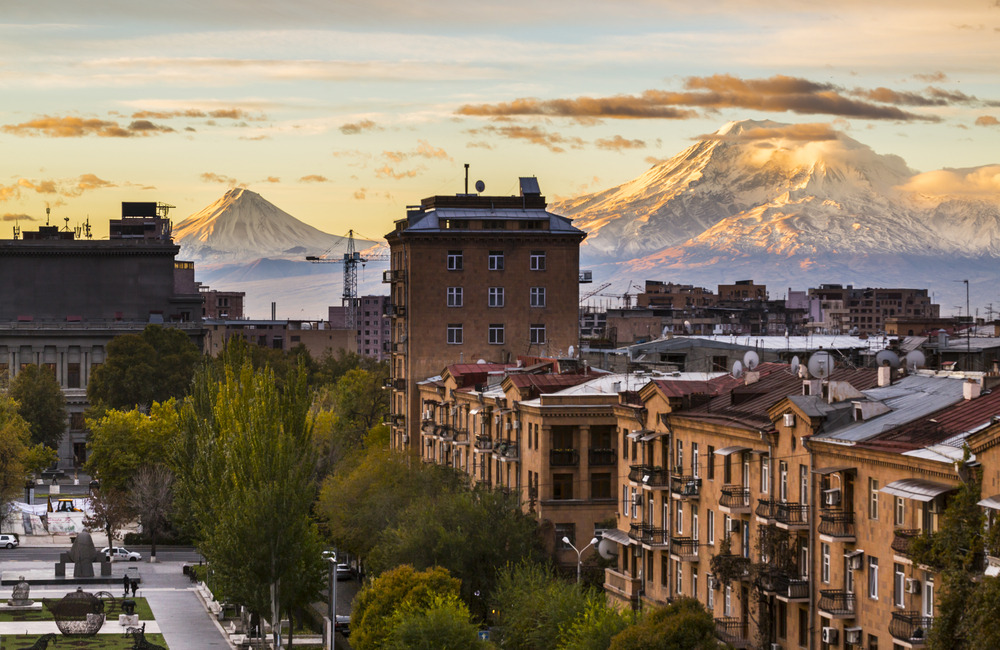
On clear days—especially early morning or in autumn—Mount Ararat appears beyond the Ararat plain, in Turkish territory. This panorama is one of the most emotionally charged views for Armenians.
The Cafesjian galleries
Glass art, a specialty of the collection, deserves particular attention. Rotating exhibitions regularly refresh the offerings; inquire about the current program.
Photography tips
The golden morning light illuminates the white façade without glare. In late afternoon, Botero sculptures cast expressive shadows on the limestone. For Mount Ararat, favor autumn or winter mornings when the air is clearest. From the summit, frame wide to include the Mother Armenia statue and the city below.
Location and access
The Kaskad is located in the Kentron district, a few minutes' walk from Republic Square. The main entrance is on Tamanyan Street. The metro (Yeritasardakan station) provides easy access from other neighborhoods. The site is accessible to people with reduced mobility via interior escalators, subject to their operation.
Nearby: Republic Square and the Museum of the History of Arménie.
In the surrounding area
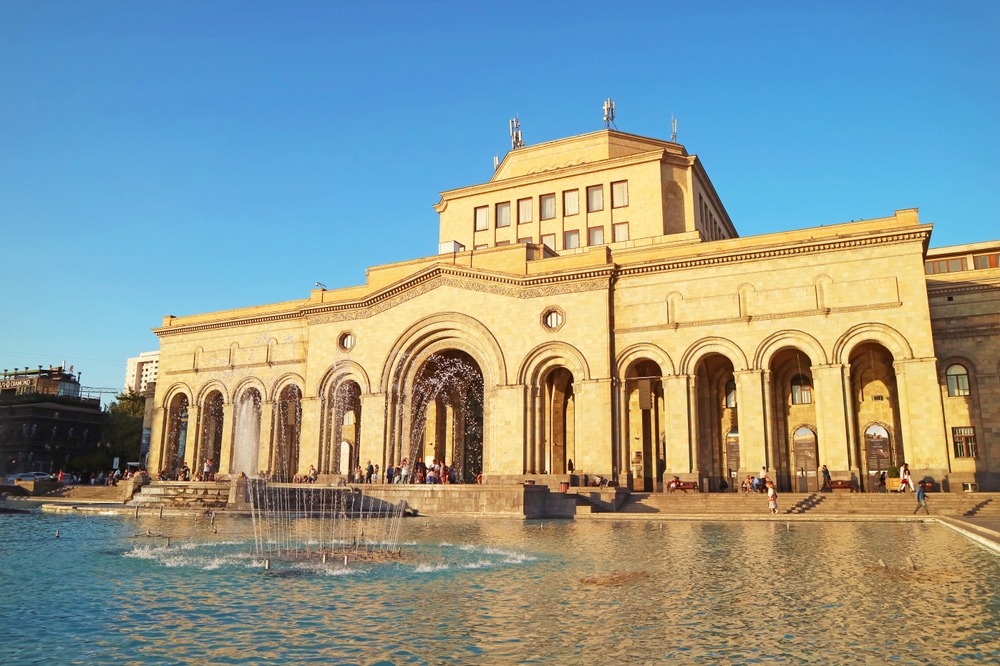
- Republic Square — Yerevan's monumental heart, with musical fountains in the evening.
- Museum of the History of Arménie — Archaeological and ethnographic collections spanning several millennia.
- Yerevan Opera House — An elegant Soviet-era building, minutes from the Kaskad.
- Abovyan Street — A lively hub for cafés, galleries and Armenian design boutiques.
Frequently asked questions
Access to the external staircases and gardens is free. The interior galleries of the Cafesjian Center are paid; rates should be verified directly on-site.
Yes, escalators are installed inside the complex. Their operation may vary depending on the season or maintenance; check at the entrance.
Autumn and winter offer the clearest skies. In summer, heat haze often obscures the peak. Morning hours are preferable, before heat interferes with visibility.
Plan 1.5 to 2 hours to climb the terraces, view the sculptures and explore part of the galleries. A half-day allows you to experience the site without rushing.
Easily. Republic Square, the History Museum and the Opera House are all within a fifteen-minute walk from the Kaskad entrance.
External sculptures may be freely photographed. Inside the Cafesjian galleries, rules may vary depending on exhibitions; check with staff at the entrance.
Interested in this visit?
We can include it in your personalised itinerary.