Dilijan National Park
Dilijan National Park
Dense forests, medieval monasteries and river gorges: Dilijan National Park spans over 28,000 hectares in northeastern Armenia and shelters the sites of Haghartsin and Goshavank.
Dilijan National Park extends across more than 28,000 hectares in northeastern Armenia, in the heart of the Tavush region. Oak, beech and hornbeam forests blanket deep valleys crossed by the Aghstev River and its tributaries. This wooded massif, rare in Armenia, harbors several medieval monasteries and constitutes the country's principal protected natural area.
Quick facts
- Access: from Yerevan, the M4 highway leads to Dilijan in approximately 2 hours 30 minutes; marshrutkas regularly connect Yerevan to Dilijan.
- Recommended duration: a full day to combine hiking and monasteries; two days to explore multiple sectors.
- What to wear: hiking boots essential on forest trails; cover shoulders and knees to enter monasteries.
- Season: the park is accessible year-round; secondary forest roads may be snow-covered from December to March.
What you'll see
The park offers dense forest cover, exceptional for the South Caucasus. Marked trails traverse wetlands, alpine meadows and rocky gorges. Wildlife includes brown bears, lynx, deer and a wide variety of forest birds. Two UNESCO World Heritage monasteries — Haghartsin and Goshavank — are located within or immediately bordering the park.
History and context
Created in 2002, Dilijan National Park succeeded a nature reserve established as early as 1958. The region was already frequented during the Soviet era as a health resort and spa destination, thanks to its pure air and mineral springs. The monasteries of Haghartsin and Goshavank, founded in the 12th-13th centuries, testify to ancient human settlement in these forests.
Highlights of your visit
Haghartsin Monastery
Nestled in a wooded valley, this 12th-13th century monastic complex comprises three churches, a gavit (narthex) and a refectory. Recent restoration has preserved the relief sculptures on the façades. Access is by forest road from Dilijan.
Goshavank Monastery
Founded in 1188 by the monk Mkhitar Gosh, an Armenian legal scholar and fabulist, this monastery preserves khachkars (carved stone crosses) among Armenia's most finely sculpted. The adjacent village of Gosh is quiet and unfrequented.
Hiking trails
Several marked routes depart from Dilijan's center or forest parking areas. The trail connecting Dilijan to Haghartsin through the forest (approximately 7 km) is the most popular. Less-traveled paths climb toward ridgelines with open views over the valleys.
Parz Lake
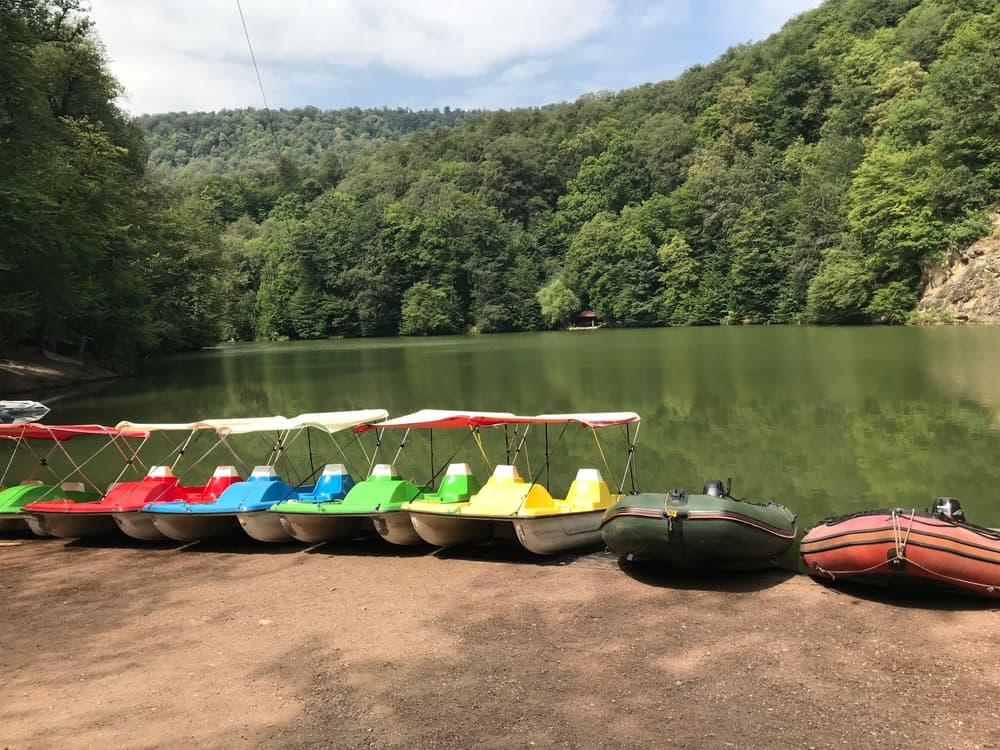
This small mountain lake, accessible by car from Dilijan, is surrounded by coniferous forests. Outdoor activities are offered here; the spot is particularly lively in summer.
Etiquette and visiting rules
- In monasteries, cover shoulders and knees; shawls are sometimes available at the entrance.
- Do not pick plants or disturb wildlife in the park.
- Campfires are prohibited outside designated zones.
- Respect silence in active places of worship.
Photography tips
Morning light filters through the beeches and creates mist effects in the valleys, ideal in autumn (October-November) when foliage turns russet and gold. For monasteries, favor quiet mid-morning hours. Inside the churches, photography is generally permitted without flash.
Location and access
The park surrounds the town of Dilijan, in the Tavush region, approximately 100 km north of Yerevan via the M4 highway. The town itself serves as a base: accommodations, restaurants and a tourist information point are concentrated there. Local taxis allow you to reach the monasteries if you don't have a vehicle. Wheelchair accessibility is limited on forest trails; monastery courtyards are generally accessible.
Nearby attractions
- Haghartsin Monastery — medieval complex with three churches in the heart of the forest, a few kilometers from Dilijan.
- Goshavank Monastery — site founded by Mkhitar Gosh, celebrated for its sculpted khachkars.
- Parz Lake — peaceful forest lake, starting point for summer outdoor activities.
- Old town of Dilijan — restored Sharambeyan Street with 19th-century wooden houses and artisan workshops.
Frequently asked questions
Spring (May-June) and autumn (September-October) are the most pleasant periods. Autumn offers spectacular foliage. In winter, secondary forest roads may be snow-covered and difficult to access.
A vehicle facilitates access to the monasteries and remote trails. Marshrutkas connect Yerevan to Dilijan, and local taxis serve the main sites from town. Some trails start directly from Dilijan's center on foot.
Yes, Haghartsin and Goshavank are both accessible from Dilijan in a single day. Allow approximately one hour at each site, plus travel time.
Main trails, particularly the one to Haghartsin, are accessible to children in good physical condition. Forest paths are dirt-based and may be muddy after rain; closed-toe shoes are recommended.
Local guides can be arranged from Dilijan or through agencies in Yerevan. Dilijan's tourist center provides information on trails and can direct you to local service providers.
Interested in this visit?
We can include it in your personalised itinerary.