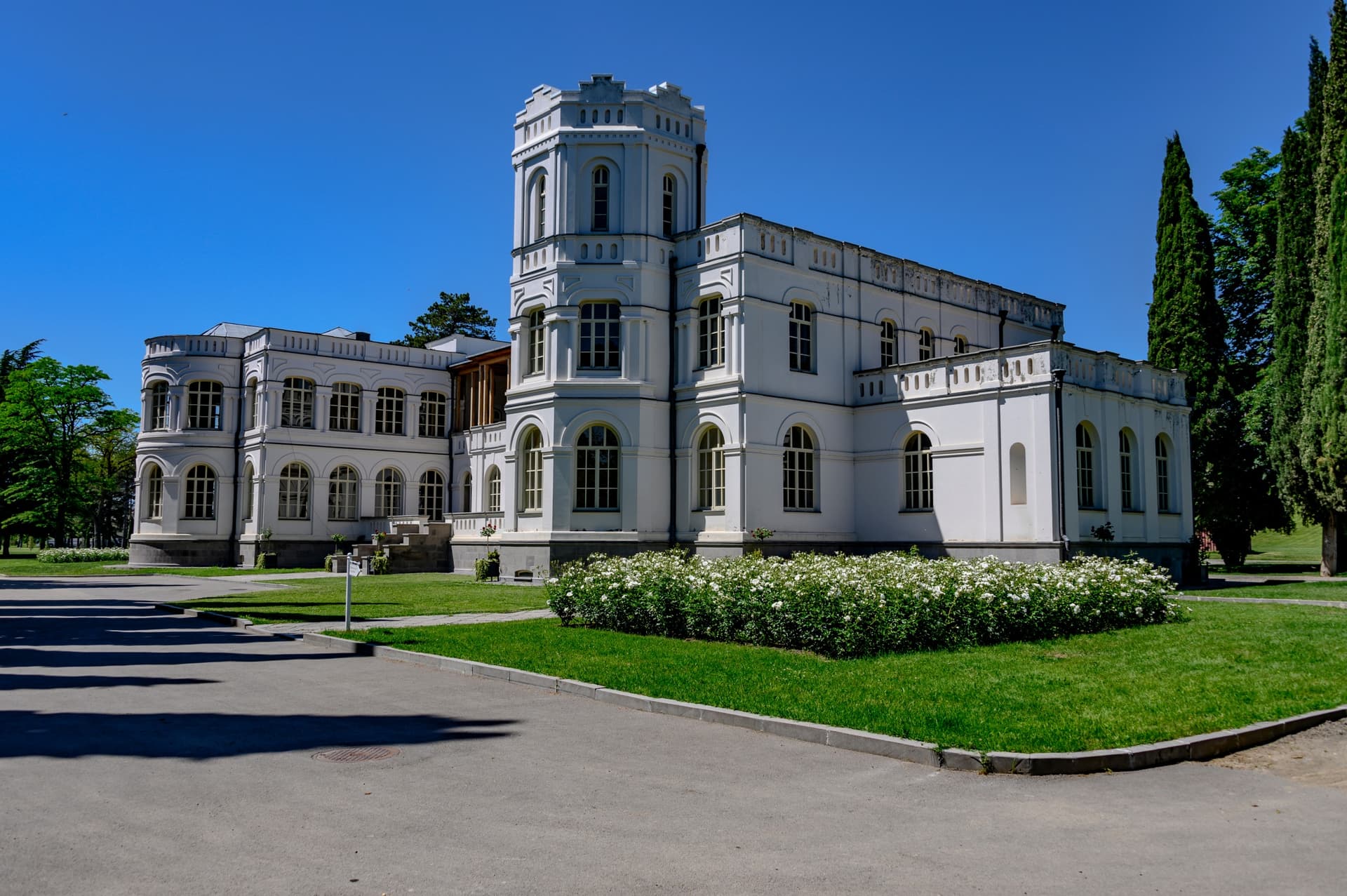
Mukhrani Castle
Mukhrani Castle
A wine estate and royal residence 25 minutes from Tbilisi, Mukhrani Castle combines Bagrationi heritage, Georgian grape varieties and tastings.
Along the Wine Route, approximately 25 minutes from Tbilisi, Mukhrani Castle brings together an 85-hectare wine estate, a 19th-century building, and a heritage linked to the Bagrationi royal family. The site combines historical visits, wine tastings from native Georgian grape varieties, and traditional activities centered on wine and local cuisine.
Why visit Mukhrani Castle
The estate appeals equally to wine enthusiasts and those drawn to heritage. Three elements set it apart:
- A main building from 1873, designed by French architects at the request of Prince Ivane Bagration of Mukhrani, and restored after the Soviet period.
- A vineyard situated on a plateau at approximately 570 meters altitude, planted with native varieties (Mtsvane, Goruli, Saperavi, Rkatsiteli, Shavkapito) and international grapes (Chardonnay, Cabernet Sauvignon).
- A reconstructed production cellar, with complementary activities: traditional bread-making, horseback rides around the estate, chacha distillation workshops.
The entire site can be visited in half a day and makes a coherent stop between the capital and the Mtskheta region.
History of the estate
The site's history stretches back long before modern wine production. In 1512, Mukhrani Castle housed the Bagrationi royal family, from which Ivane Mukhranbatoni descended—the founder of the wine estate as we know it today.
Founding and golden age
The main building was constructed starting in 1873 by French architects; construction took twelve years. Upon his return from France in 1876, Prince Ivane Mukhranbatoni inherited the estate and applied the winemaking expertise he had learned abroad. The first vintage was released in 1878.
By the late 19th century, Mukhrani wines were exported to Ukraine, the Baltic States, Austria, the United States, France, and Russia, where they notably graced the table of the Russian Imperial Court. The estate received numerous awards at wine exhibitions in Moscow and Paris, and became a meeting place for Georgian society's elite during the Belle Époque.
Abandonment and restoration
During the Soviet period, the castle was abandoned and nearly destroyed. A restoration project was launched in 2002, led by Mamuka Khazaradze, Frederik Paulsen, and Badri Japaridze. A new cellar was put into service in 2007, and wine production resumed on a large scale.
What to see and do on site
The castle and gardens
The guided tour covers the restored main building, gardens, and the immediate surroundings of the estate. It dwells on the history of the Bagrationi family and the political and cultural role played by Mukhrani in the 19th century.
The cellars and production
The cellars reconstructed in their original style house more than 60,000 barrels. Annual production can reach one million bottles. The process emphasizes quality: grapes are processed within a maximum of 15 minutes after harvest, then stored at a constant temperature of 16°C. The planting density, below 2,700 vines per hectare, aims to concentrate yields per vine.
Tasting and restaurant
The visit is typically extended with a tasting of the estate's wines, made from around ten varieties. On site, the Samepo Marani 1878 restaurant—its name recalling the first bottling—offers refined Georgian dishes crafted from local products, paired with Mukhrani wines.
Complementary activities
- Making traditional Georgian bread
- Horseback rides around the estate
- Introduction to chacha distillation (grape brandy)
Practical information
- Duration of visit: allow 2 to 3 hours with tasting, a half-day if you add the restaurant or an activity.
- Reservation: recommended, particularly for guided tours in English-speaking groups and for the restaurant.
- Pricing: moderate rates for visits and tastings, varying based on the formula chosen (number of wines tasted, meals, activities).
- Best time to visit: May through October, when the vines are in vegetation. The harvest period (September) remains the most lively.
How to get there from Tbilisi
The village of Mukhrani is located approximately 25 minutes by road northwest of Tbilisi, heading toward Mtskheta then turning toward the estate. Three practical options:
- Private car or taxi: the simplest solution, especially if you plan to taste wines.
- Organized excursion: many agencies offer a day trip combining Mtskheta and Mukhrani Castle.
- Marshrutka: possible to nearby areas, but inconvenient for reaching the estate itself.
What to combine in the surrounding area
Mukhrani Castle fits well into an itinerary centered on the capital and Central Georgia:
- Tbilisi and its historic quarters, a logical starting point.
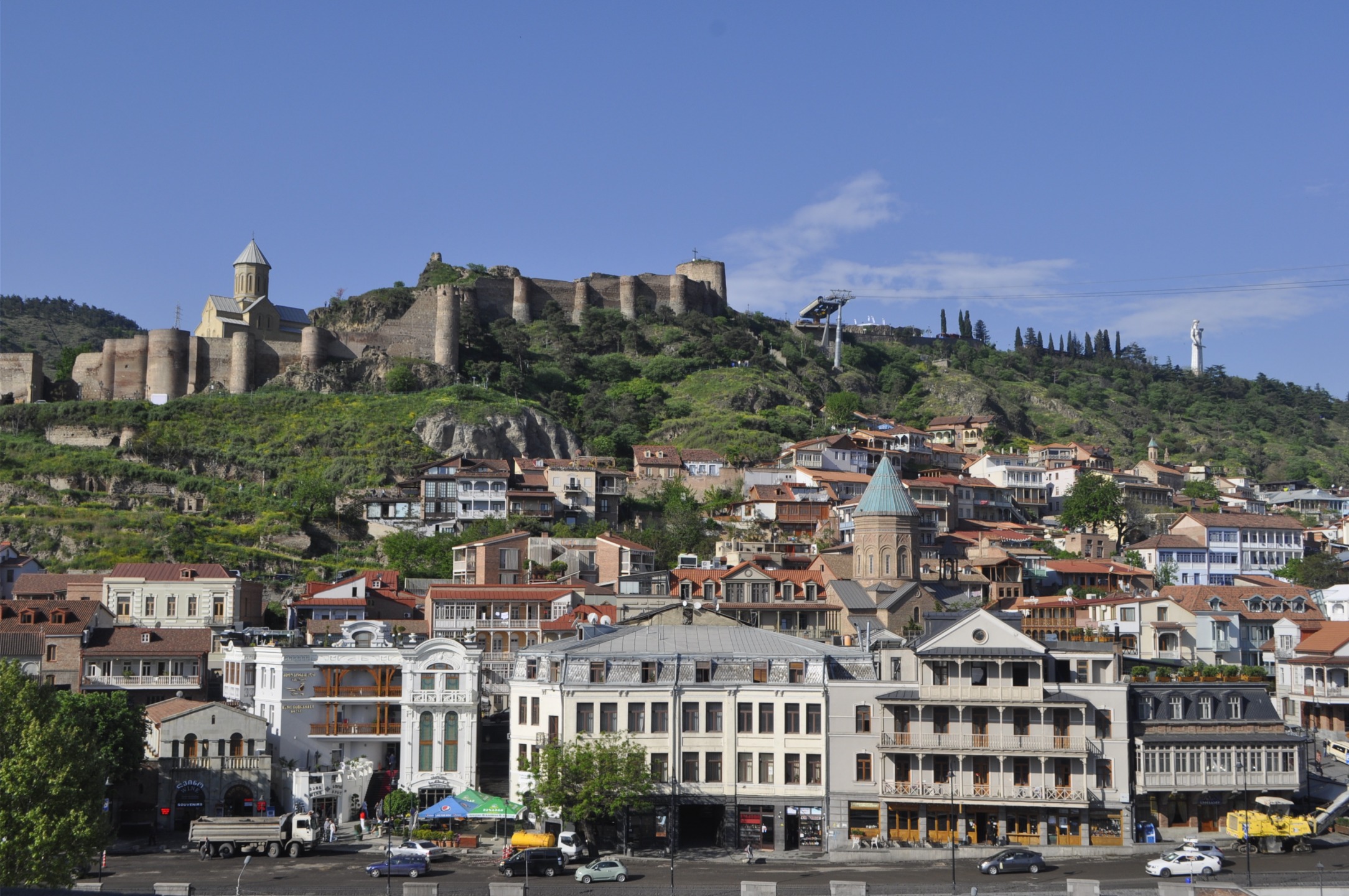
- The Narikala Fortress, which overlooks the capital.
- The Tbilisi Open Air Museum of Ethnography, a cultural complement exploring rural traditions.
- Further west, the Ghelati Monastery and Bagrati Cathedral, to extend your discovery of Georgian heritage.
Frequently asked questions
Frequently asked questions
Yes, booking is recommended, especially for a guided tour with English-speaking staff and for the Samepo Marani 1878 restaurant. During peak season, slots fill quickly.
Allow 2 to 3 hours for the castle tour, cellars, and tasting. If you add a meal or activity (horseback riding, bread-making, chacha), plan for a half-day.
The estate cultivates native Georgian grape varieties (Mtsvane, Goruli, Saperavi, Rkatsiteli, Shavkapito) and international varieties such as Chardonnay and Cabernet Sauvignon, making around ten different wines.
The simplest solution is to book a full-day excursion from Tbilisi, often combined with Mtskheta. A private taxi remains a practical alternative, especially if you plan to taste wines.
Yes, the estate is open year-round, but the experience is more rewarding from May through October, when the vines are in active growth. The harvest period in September is the most vibrant time to visit.
Preparing your trip
Mukhrani Castle naturally fits into a Georgia itinerary centered on heritage and wine. To build a custom trip including Tbilisi, Mtskheta, and the Wine Route, explore our Georgia travel suggestions.
Interested in this visit?
We can include it in your personalised itinerary.