Dzitoghtsyan Museum (Museum of Urban Life in Gyumri)
Inside a bourgeois black tuff house in Gyumri, the Dzitoghtsyan Museum recreates the daily life of the city during the tsarist and Soviet periods, complete with period furnishings and photographic archives from before the 1988 earthquake.
Housed in a 19th-century bourgeois residence at the heart of Gyumri, the Dzitoghtsyan Museum documents the daily life and urban culture of the city during the tsarist and Soviet eras. Its collections of domestic objects, photographs, and furnishings reconstruct the atmosphere of a prosperous trading city before the devastating earthquake of 1988. It is one of the rare places where Gyumri's distinct identity—separate from Yerevan—can be read concretely.
Practical Information at a Glance
- Admission: paid (modest fee)
- Recommended duration: 45 minutes to 1.5 hours
- Dress code: no specific requirements
What You'll See
The museum occupies a residence built from black tuff, characteristic of Gyumri's architecture. The rooms recreate bourgeois interiors: period furnishings, tableware, traditional clothing, and musical instruments. A photographic section traces the city's history from the Russian period through the 1988 earthquake. Certain displays showcase local artisanal objects, notably embroideries and worked metal pieces.
History and Context
Gyumri, formerly Alexandropol and later Leninakan, was one of the most active cities in the South Caucasus during the 19th century. The Dzitoghtsyan house belonged to a family of wealthy Armenian merchants. Transformed into a museum, it illustrates the lifestyle of the local bourgeoisie before the December 7, 1988 earthquake destroyed much of the city's urban and human fabric.
Highlights of Your Visit
Reconstructed Interiors
Each room is arranged as though its inhabitants had just stepped away. The attention to detail—embroidered tablecloths, samovars, family portraits—makes the reconstruction particularly evocative.
The Photographic Collection
The photographic archives form the most moving part of the museum. They show Gyumri before 1988: bustling streets, markets, buildings that no longer exist.
The House's Architecture
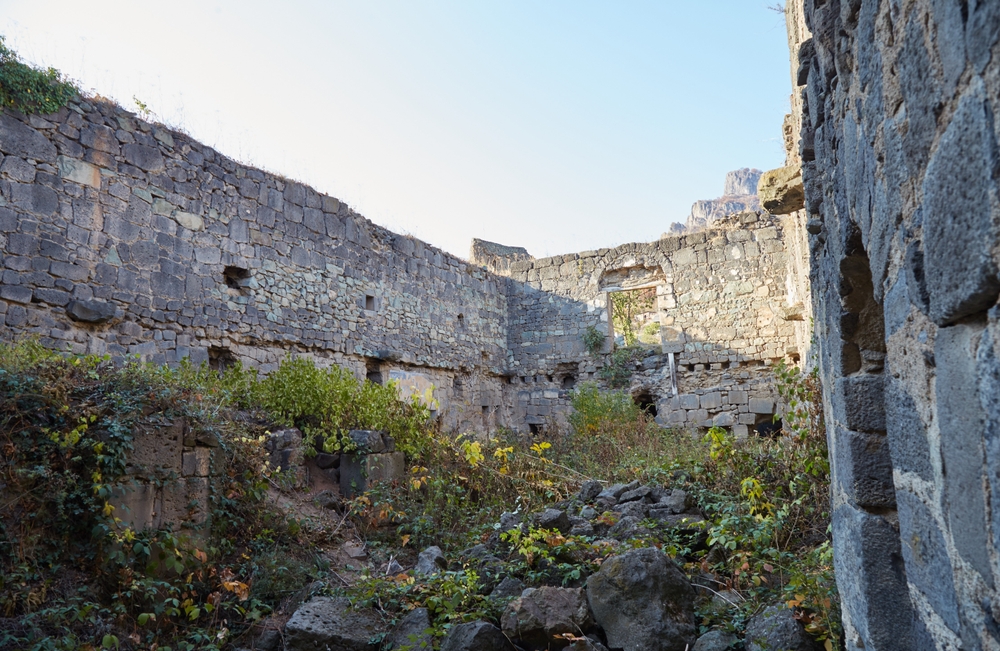
The building itself deserves attention. Constructed from basalt and dark tuff, it exemplifies the "Gyumri style" with its arcaded windows and interior courtyard.
Photography Tips
Natural light enters well during mid-morning hours. The reconstructed interiors photograph easily from doorways. Check with staff whether photography is permitted in all rooms before you begin.
Location and Access
The museum is located in the historic district of Gyumri, near Vardanants Square and the sector of black tuff houses. The city is reachable from Yerevan by train or minibus (approximately 2.5 hours). Most of Gyumri's historical sites are grouped within a compact area, easily navigable on foot from the center.
Nearby Attractions
- Vardanants Square — the civic heart of Gyumri, surrounded by 19th-century tuff buildings.
- Church of the Holy Savior (Amenaprkich) — a large black basalt church undergoing restoration following the 1988 earthquake.
- Aslamazyan Sisters House-Museum — a collection of colorful paintings by the two Armenian artists who originated from Gyumri.
- Kumayri District — a protected area of traditional tuff houses, artisans' workshops, and small cafés.
Frequently asked questions
Generally, no advance reservation is necessary. The museum welcomes individual visitors directly on-site.
Guides speak primarily Armenian and Russian. For a commentary in English, it is best to arrange a local guide through your travel agency.
Yes. The Dzitoghtsyan Museum, the Aslamazyan Sisters House-Museum, and the Kumayri District are all within close proximity. A half-day is sufficient for all three.
Spring (April–June) and autumn (September–October) offer pleasant weather. Winter is cold and snowy, but the city's dark tuff under snow has its own distinctive character.
The historic house features thresholds and stairs. Accessibility for people with reduced mobility is limited; contact the museum directly before your visit for details.
Interested in this visit?
We can include it in your personalised itinerary.