Matosavank Monastery
Matosavank Monastery
Founded in 1247 near Dilidjan, Matosavank Monastery is discovered at the end of a forest walk in the national park, 3.5 km from the town.
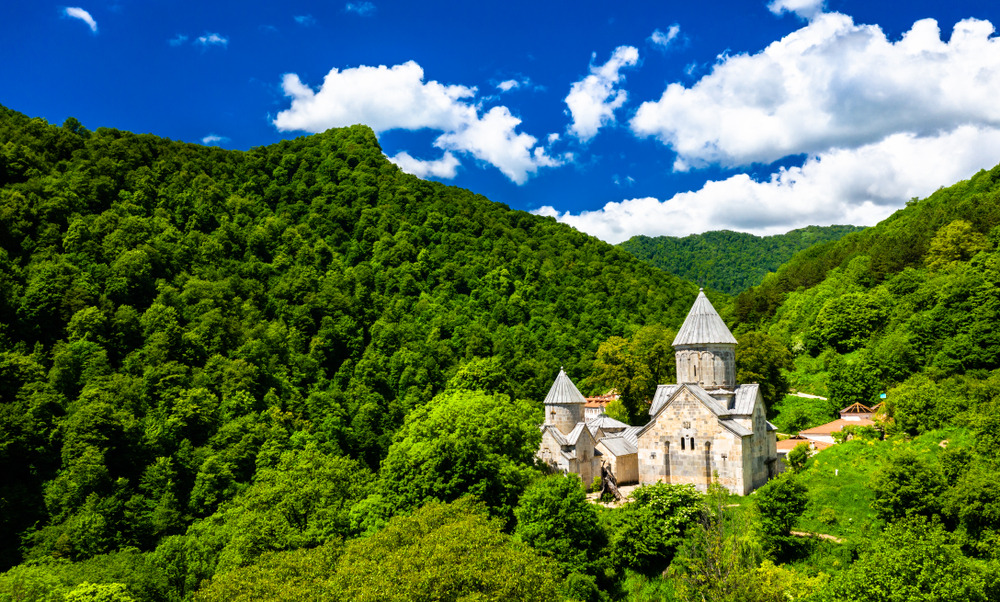
Matosavank Monastery lies 3.5 km northwest of Dilidjan, concealed within the national park forest. Founded in 1247, this small monastic complex, now partially in ruins, ranks among the least visited medieval sites in northern Arménie. Its appeal stems equally from its architecture and its integration into a dense forest environment, requiring a short hike to reach.
Why visit Matosavank
Matosavank is not a spectacular site in the conventional sense. That is precisely what makes it compelling: a 13th-century monastery overgrown with moss, its walls gradually fading beneath vegetation, removed from tourist circuits. The approach walk, lasting between 1 and 1.5 hours from Dilidjan trails, traverses dense forest typical of northern Arménie, and the site pairs easily with a visit to nearby Jukhtak Vank.
Devotees of Armenian monastic architecture will find khachkars (carved stone crosses) and well-preserved sculpted walls, despite the site's partial abandonment. The atmosphere, particularly in misty weather, contrasts sharply with that of major tourist monasteries such as Haghpat or Sanahin.
Monastery history
Matosavank was founded in 1247 by Avag, son of Ivane of the Mkhargrdzeli dynasty, an Armenian princely family serving the Georgian kingdom. According to local tradition, its construction is said to have been inspired by an Armenian-Georgian victory against the Seljuk Turks, an account transmitted orally and best taken as such.
The monastery is also known as Surb Astvatsatsin (Holy Mother of God), while the name Matosavank pays tribute to Matos, its first abbot. The site belongs to the same wave of 13th-century monastic constructions that gave rise to several religious complexes in the region, benefiting from a period of relative stability under Mkhargrdzeli rule.
What to see on-site
The complex comprises three principal elements:
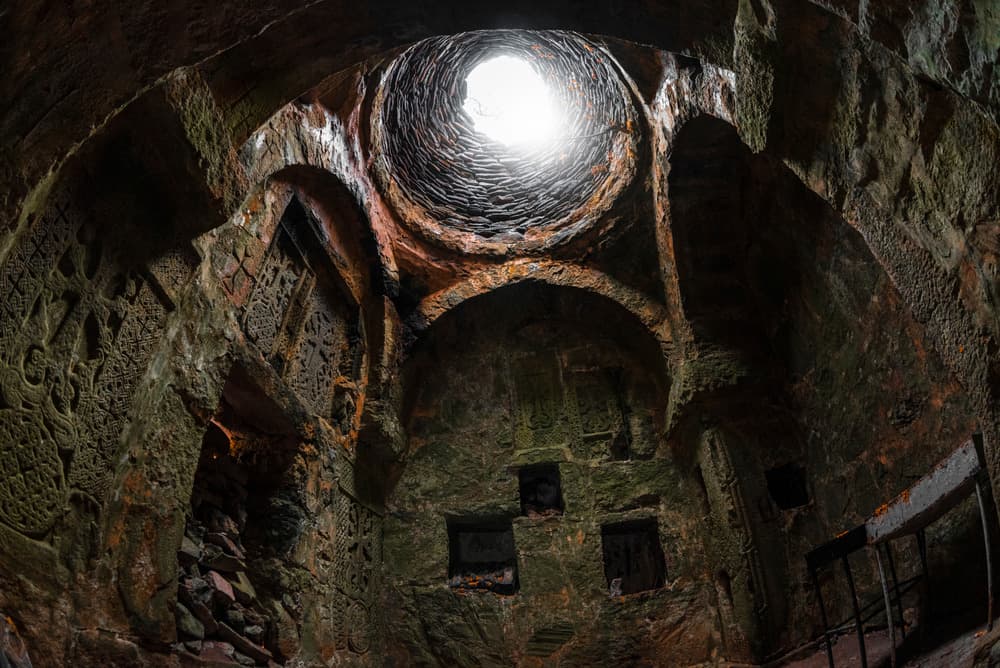
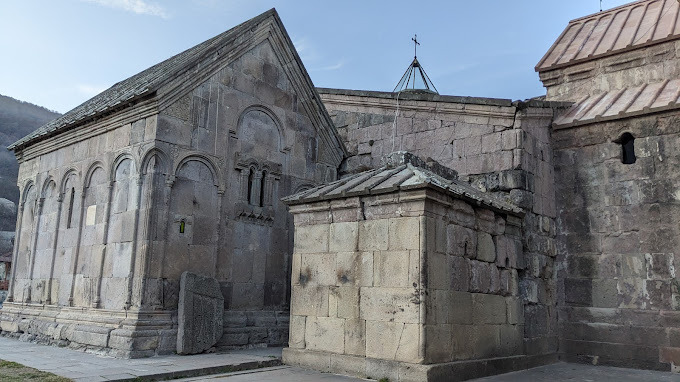
- The church, modest in scale, built in local stone, its roof partially collapsed.
- The narthex (gavit), an entrance and burial space characteristic of Armenian monastic architecture.
- The former library, testament to the site's intellectual vocation, which likely once housed medieval manuscripts.
The walls still bear sculptures and carved khachkars, partially covered in moss. An ancient cemetery lies nearby, completing the ensemble. The vestiges, buried beneath Dilidjan National Park's vegetation, remain largely unrestored, lending them a raw archaeological dimension.
When to visit
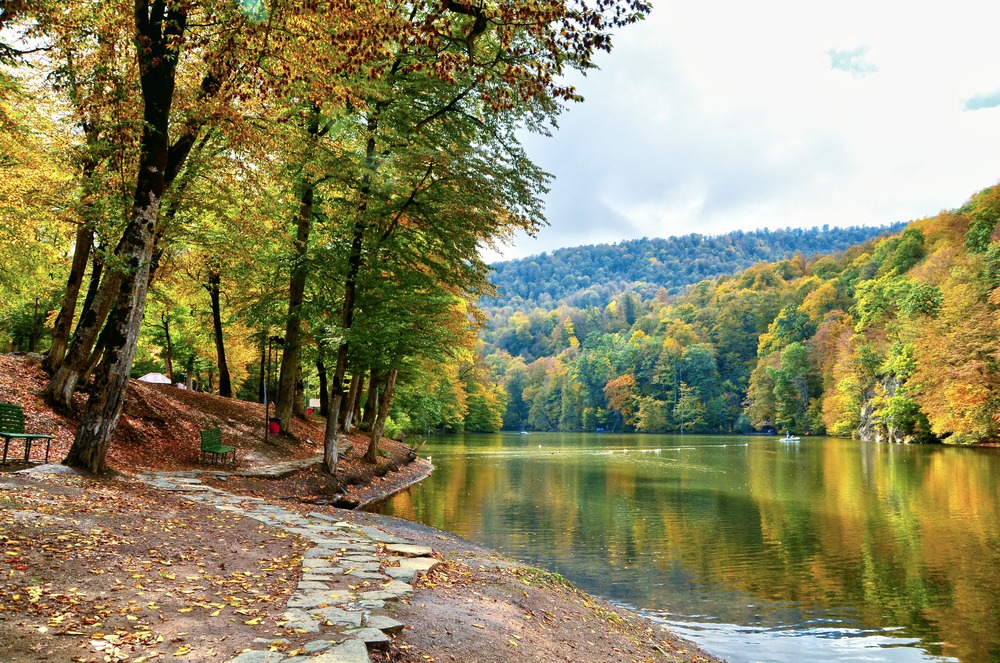
The most favorable period runs from April through October. In spring and early summer, trails are passable and the forest is in full activity. Autumn, particularly October, offers striking colors in the national park's deciduous woodland.
In winter, snow can render access difficult or unsafe on unmarked trails. During rain or fog, the site gains atmosphere but terrain becomes slippery: prepare with appropriate footwear.
How to get there
The monastery lies approximately 100 km north of Yerevan, in the Tavush region.
By car from Yerevan
Take the M-4 and H-29 highways toward Sevan, then continue to Dilidjan. Allow 2 hours of travel depending on conditions. Once in Dilidjan, follow signs toward the national park. Parking near the trailhead is limited; plan to park along the roadside.
By public transport
Marshrutkas (minibuses) regularly connect Yerevan's northern bus station (Kilikia) to Dilidjan, taking comparable time to driving. From Dilidjan, a taxi is necessary to reach the trailhead; negotiate the fare in advance and arrange your return, as taxis will not spontaneously come back.
On foot from Dilidjan
Several forest trails depart Dilidjan toward Matosavank and Jukhtak Vank. The approach walk lasts between 1 and 1.5 hours. Signage is inconsistent, so an offline map (Maps.me or equivalent) is recommended.
Practical information
- Access: free; the site is in ruins and unguarded.
- Equipment: hiking boots, water, windproof clothing. Terrain is uneven and damp.
- Visit duration: allow 30 to 45 minutes on-site itself, plus round-trip walking time.
- Recommended combination: paired visit with Jukhtak Vank, located mere hundreds of meters away on the same forest circuit.
Nearby attractions
The Dilidjan region concentrates several sites accessible within a single day:
- Jukhtak Vank, sister monastery located just hundreds of meters away, often visited in the same outing.
- The town of Dilidjan, nicknamed the "little Swiss Armenia,
Nearby
Interested in this visit?
We can include it in your personalised itinerary.