Goshavank
Goshavank
Medieval monastery rebuilt by Mkhitar Gosh 23 km from Dilijan: three churches, octagonal domed gavit and 1291 library rotunda.
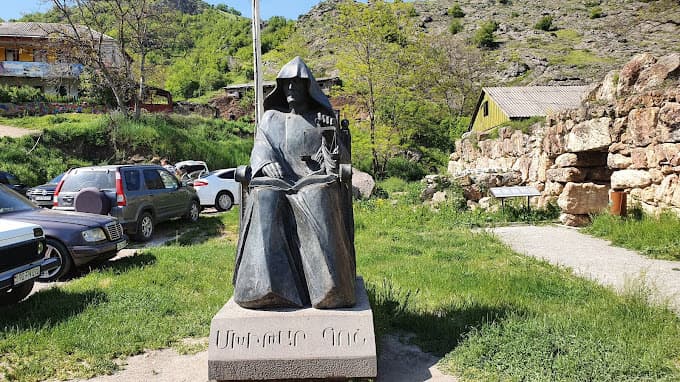
Goshavank is a medieval Armenian monastery located approximately 23 km from Dilijan, in the Tavush region. Built in the late 12th century on the ruins of Nor Getik, it became a major spiritual and intellectual center thanks to scholar Mkhitar Gosh. Its compact ensemble of churches, octagonal domed gavit, and 1291 library rotunda make it one of the best-preserved architectural sites in northeastern Arménie.
Why visit Goshavank?
Goshavank concentrates in a compact space several rare elements of medieval Armenian monastic architecture. The site features three churches, an octagonal domed gavit, a round bell tower housing the former library, as well as elaborately carved khachkars from the 13th century. It also testifies to a singular intellectual legacy: Mkhitar Gosh, founder of the rebuilt monastery, drafted the first Armenian legal code here and taught a generation of scholars, including historian Kirakos Gandzaketsi.
The natural setting adds to the site's appeal. The monastery overlooks the forested Tandzout valley, at the edge of the Lesser Caucasus, in a peaceful area rarely touched by mainstream tourist flows.
History of the monastery
Goshavank stands on the site of the former Nor Getik monastery, destroyed by the 1188 earthquake. Following this disaster, Mkhitar Gosh took the initiative to rebuild the complex. A scholar and statesman, author of the first Armenian legal code, he restored the site to a central role in the country's spiritual and intellectual life.
He founded a school at Goshavank and trained a new generation of scholars. Among his students, Kirakos Gandzaketsi left his mark on Armenian historiography by writing The History of Arménie. The monastery's work progressed thanks to the expertise of Mkhitar the Carpenter and his disciple Hovhannes, two craftsmen essential to creating the complex.
Over time, the monastery took the name Goshavank, and the village adopted the name of Mkhitar Gosh, in tribute to his lasting influence.
What to see on the site
The main buildings are organized around a tight central courtyard. Several churches, a gavit, a library rotunda, and several ancillary chapels succeed one another in close proximity.
Sourp Astvatsatsin and its gavit
Sourp Astvatsatsin is the complex's main church. Erected between 1191 and 1196, it follows the traditional inscribed cross plan and stands out for its cylindrical drum and conical dome. Its exterior niches and two entrances, one opening directly onto the gavit, deserve attention.
To the west of the church, the gavit was built between the late 12th and mid-13th centuries. Its internal cross structure is organized around an octagonal dome supported by four columns. Two small chapels occupy the corners, and a portal with sculptural decoration reveals Seljuk influences.
Sourp Grigor
In the immediate vicinity, Sourp Grigor was built in 1231. It follows the same architectural principle as Sourp Astvatsatsin, with an inscribed cross plan, two eastern chapels, and a drum topped with a dome. Its façades are decorated with niches, and its western portal is framed with Seljuk-style sculptural ornament.
Sourp Grigor Lousavorich
Slightly to the south, Sourp Grigor Lousavorich follows a simpler plan: a single vaulted nave, an eastern apse adorned with niches. Inside, twisted columns add a singular decorative touch. The façades are rhythmed with blind arcades, columns, and niches, and the carved portal echoes Islamic art motifs of the period. Two khachkars dated 1291 once flanked the entrance; only one remains on site, the other being preserved at the History Museum of Arménie in Yerevan.
The 1291 library rotunda
North of the gavit, a covered gallery leads to a building erected in 1291. Its architecture is distinguished by the superposition of two inscribed cross plans beneath a rotunda serving as a bell tower. The building housed the monastery's library, as well as a chapel dedicated to the archangels Gabriel and Michael. The interior rests on a system of crossed arches and columns; the façades are pierced with numerous openings. An external staircase, to the west, allowed access to the upper floor.
Nearby, vestiges of the refectory remain, likely once covered with a wooden roof.
The funerary chapel of Mkhitar Gosh
Slightly apart to the southwest, Sourp Gevork is the funerary chapel dedicated to Mkhitar Gosh. Built in 1254, it follows a cruciform plan. However, the founder's vault has not been preserved.
Ancillary chapels and enclosure
Three small chapels complete the ensemble: two southeast of the gavit and a third, in ruins, east of Sourp Grigor. The complex was once surrounded by walls, of which very few elements remain today.
Practical information
- Location: rural community of Gosh, Tavush region, approximately 23 km from Dilijan.
- Elevation: 1,252 meters, on a natural mount overlooking the Tandzout valley.
- Visit duration: allow approximately 1 to 1.5 hours on site to explore the entire complex.
- Access: site open to the public, free entry. Church access hours may vary by season and services.
- Dress code: modest clothing recommended, shoulders covered to enter the churches.
How to reach Goshavank
From Dilijan, the road climbs northeast for about twenty kilometers toward the village of Gosh. The drive takes approximately 30 to 40 minutes depending on road conditions. A car (rental or taxi) remains the simplest option, as public transportation is scarce in this rural area.
From Yerevan, expect approximately 2.5 to 3 hours of driving via the M-4 then Dilijan. The monastery combines easily with a visit to the Temple of Garni or another heritage site the same day if you depart early. Many tours from the capital include Goshavank in a day dedicated to the country's north.
When to visit Goshavank
The Tavush region enjoys a mid-mountain climate, more humid and cooler than the rest of Arménie. The most favorable period extends from late May to early October, when roads are passable and the surrounding vegetation is at its best.
- Spring (May-June): verdant valley, mild temperatures, few visitors.
- Summer (July-August): pleasant climate at altitude, ideal for combining hiking and sightseeing.
- Autumn (September-October): marked autumn colors in surrounding forests.
- Winter: access sometimes difficult due to snow, certain sections potentially closed.
Around the area
Goshavank naturally fits into an itinerary around Dilijan and the national park that surrounds it. Several sites complement the visit:
- Dilijan and its restored old town, a convenient starting point for exploring the region.
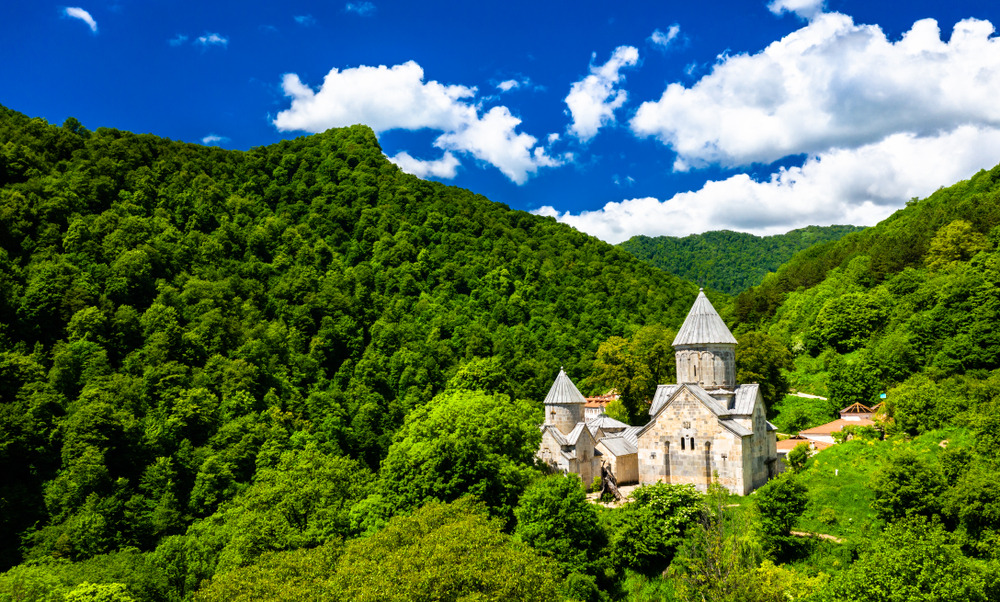
- Haghartsin Monastery, another medieval monastic ensemble located about twenty kilometers away.
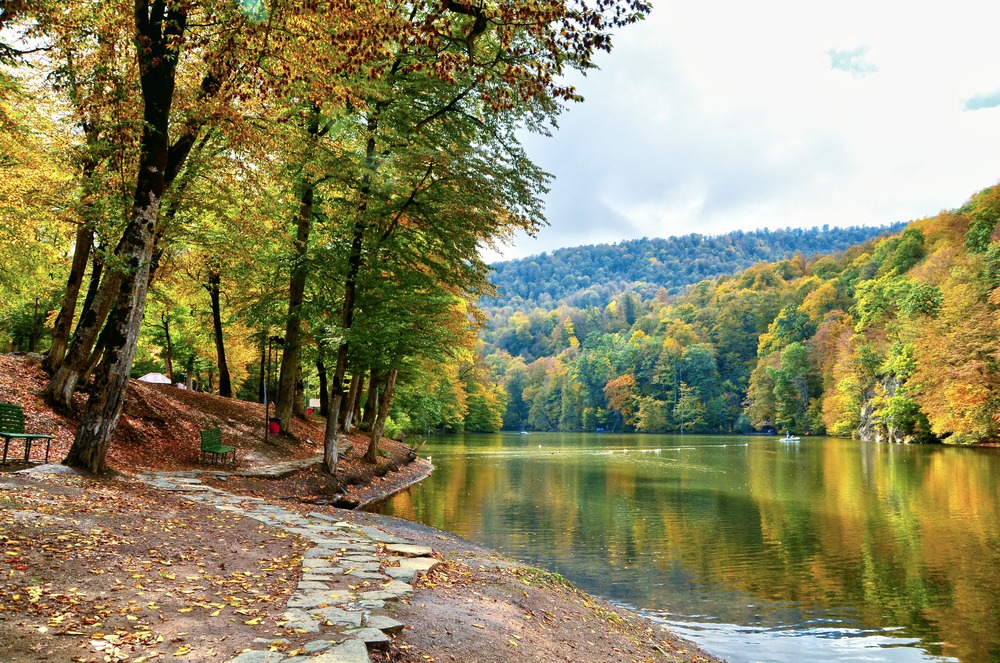
- Dilijan National Park, forest trails and mountain lakes.
- Monument to the Armenian alphabet, accessible on the road connecting Yerevan to Dilijan.
- Saint Gregory Cathedral in Yerevan, to further explore Armenian religious architecture.
Frequently asked questions
Frequently asked questions
Goshavank is located in the village of Gosh, Tavush region, in northeastern Arménie, approximately 23 km from Dilijan and about 110 km from Yerevan.
Allow approximately 1 to 1.5 hours to explore the entire complex: the three churches, the gavit, the library rotunda, and the ancillary chapels.
The site is accessible year-round, but access may be difficult in winter due to snow. The most favorable period extends from May to October.
Mkhitar Gosh was a 12th-century Armenian scholar and statesman, author of the first Armenian legal code. He rebuilt the monastery after the 1188 earthquake and founded an important school there.
Yes. Goshavank easily combines with Haghartsin Monastery and a visit to Dilijan the same day. Departing from Yerevan, a full-day excursion is possible.
Include Goshavank in an Arménie trip
Goshavank has its place in any itinerary exploring the country's north and Armenian monastic heritage. To plan a stay combining medieval sites, Lesser Caucasus landscapes, and historic cities, consult our Arménie trips custom-designed by our local specialists.
Nearby
Interested in this visit?
We can include it in your personalised itinerary.