Yerevan
Yerevan
Older than Rome, carved from pink tufa and framed by Mount Ararat, Yerevan reveals 2,800 years of history, vibrant markets, and a unique cultural scene in the heart of the Caucasus.
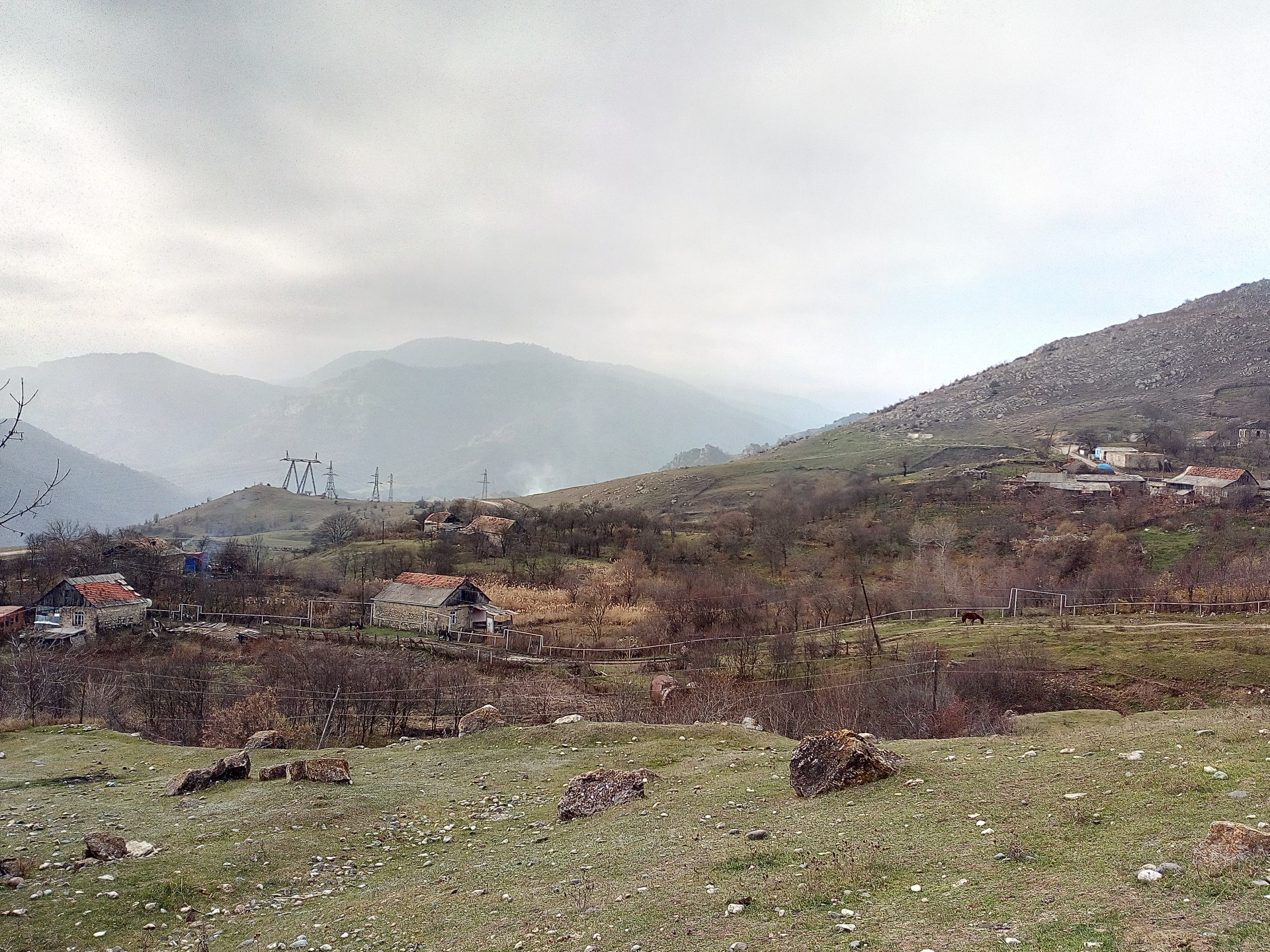
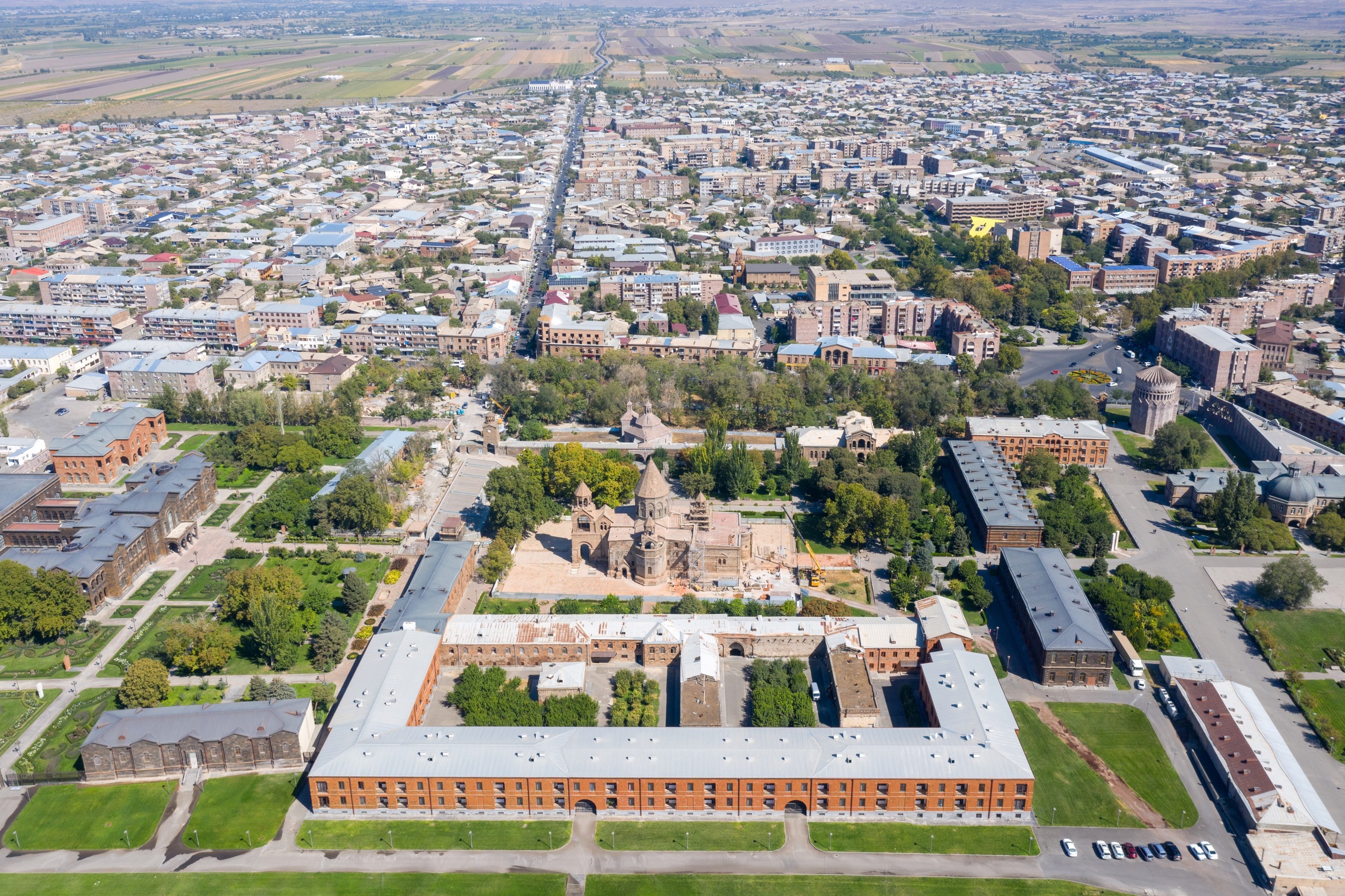
Located to the west of Arménie, at the eastern edge of the Ararat Plain, Yerevan is the country's capital and undeniably its largest city. This enchanting metropolis provides access to the gorges of the Hrazar River, as it sits just above them.
With Mount Ararat as its backdrop, Yerevan draws the curiosity of hikers eager to discover generous natural landscapes. The well-trodden paths that crisscross this region lead travelers to viewpoints unveiling magnificent panoramas of the city and its surroundings.
On the historical and cultural front, Yerevan boasts numerous monuments, all worthy of a closer look. Several of the city's streets are lined with traditional buildings showcasing the grandeur of Arménie's traditional architecture. There are also monasteries and other remnants of the past hidden deep within its natural spaces.
Yerevan's History
Yerevan derives its name from Erebouni, an ancient military fortress built during the reign of King Argishti I. The city was established to defend against attacks from the North Caucasus. Although there are traces of earlier occupation, a cuneiform inscription carved into stone by order of the same king in 782 BC is considered the founding moment of the city of Yerevan. It was during the height of Urartian power that the city acquired irrigation canals and a reservoir.
A century later, Erebouni was attacked by Scythian tribes, who burned the city and killed most of its population. To offset the abandonment of Erebouni, King Rusa II built another fortress, Teishebani, kilometers to the north of the previous city, but this too was destroyed by the same Scythians. The success of this tribe was short-lived, as the Medes, their allies, fell under the control of the Achaemenids, who thereafter administered Yerevan and its region. The reconstruction of both cities, Erebouni and Teishebani, was then planned.
In the early Middle Ages, Yerevan's development was intense. Its first church, the Church of Saint Peter and Paul, was built in the 5th century. Faced with this, various Arab attempts to dominate the city finally bore fruit, and they captured Yerevan in 658. The Arabs sought mass conversions, but strong local resistance forced them to negotiate. The Caliphs were thus obliged to tolerate Christianity and grant broad autonomy to Armenians.
Yerevan enjoyed a century of peace and prosperity until the revolts of 740. During these crises, the city was plundered and certain quarters were burned. However, the arrival of the future King Ashot I in 850 as governor, known as the "Prince of Princes," changed the situation. Yerevan regained its autonomy, marking the beginning of the Bagratid dynasty.
In 920, King Ashot II ruled Yerevan and its region with Byzantine support. The city became economically and militarily powerful, which is why, by the 10th century, it became the true center of eastern Arménie. The city was ruled by the Bagratid dynasty until the 11th century, before being entrusted to the Byzantines in 1023. They could not withstand attacks from the Seljuks.
Upon the death of King Ashot II in 1041, Byzantine Emperor Michael V claimed and obtained the city of Yerevan, but a second Seljuk attack forced the Byzantines to flee to the city of Ani. Extremely violent, the Seljuks plundered and burned Yerevan, leaving the city abandoned before taking control of the entire kingdom in 1064. In the 12th century, Georgia and Armenians allied to drive back the Seljuks. Retaken in 1201, Yerevan was rebuilt and experienced a golden age for twenty years.
The year 1225 marked the start of successive Turkoman and Mongol invasions. They succeeded in controlling the city by showing certain tolerance toward Christianity. As a result, the city became the capital of one of four regions of the Mongol Empire. Some time later, toward the end of the 13th century, the conversion of Ghazan Khan and Mongol nomadism slowed the region's development. The country experienced famine and the population chose to flee, once again abandoning Yerevan.
Under Persian rule, Yerevan entered a dark period from the 16th to 17th centuries. Moreover, it became a battlefield between Persians and Turks, resulting in the destruction of parts of the city. Not to mention the various attacks by Arabs and Mongols, and especially the earthquake of 1679.
In 1827, Yerevan was occupied by the Russians and its character evolved rapidly. It eventually gained the status of provincial capital and then provincial governor's seat from 1849 onward. In 1918, Yerevan was declared the capital of the newly independent Republic of Arménie. Many buildings have been erected since that time.
Yerevan Today
Rich in history, the city of Yerevan is nowadays an unmissable tourist destination in Arménie. Streets are lined with numerous traditional buildings evoking the grandeur of Armenian architecture. Some of them are hidden within the city's natural spaces. Monasteries and other remnants of the past truly deserve a visit.
On the nature front, the city promises a pleasant stay with its green spaces and proximity to nature. Mountains and hills await those looking to stretch their legs, but there are also plains and gorges… perfect for wonderful excursions from the capital. These places all promise breathtaking landscapes.
What to Do in Yerevan?
Yerevan may seem dull at first glance, but when you pay attention to the details, an entirely different city reveals itself—one full of secrets, historic monuments, and prestigious sites to discover. Many enjoy strolling through it, stopping in a park or public square to take part in the daily life of residents. Here, encounters are easy; locals' curiosity and their smiles encourage conversation and facilitate genuine exchanges.
Like all cities, Yerevan has its share of must-see sites and places:
- Visit the Blue Mosque of Yerevan: It is one of eight mosques in the city. It is unmissable and impresses with a surface area of 7,000 m². It features a prayer hall and 28 other rooms, a library… Standing 24 m tall, its minaret is very striking. It is the main dome, beautifully decorated with drawings and patterns, that gives this complex its name of Blue Mosque.
- Visit the National Gallery of Arménie: This essential destination is dedicated mainly to art lovers. It houses collections by European and Russian artists, though talented Armenian artists naturally take pride of place. You'll find works by Shishkin, Avetisyan, Schredin…
- To continue this cultural tour, other museums await the curious, proudly on Republic Square. There is the Parajanov Museum, the Museum of the History of Arménie…
- Head to Republic Square: It is simply the most famous square in Yerevan. It is home to approximately 2,750 fountains, as well as buildings showcasing the grandeur of Armenian architecture.
- If you're there with children or as a couple, don't miss Victory Park, where you can enjoy a picnic. It is also Yerevan's largest green space. It is an amusement park where you can find bumper cars, a Ferris wheel, and roller coasters.
- For lovers of romantic walks, be sure to visit the Cascade, a monument in the city center created by Alexander Tamanyan. It features 572 steps to reach a height of 118 m. At the summit, you can enjoy the view over Yerevan.
- If you're still looking for things to do in Yerevan, head to Mount Aragats, the playground of seasoned hikers. As you gain altitude, you'll have a clear view of the city and its surroundings**.**
- To end a day, there's nothing better than stepping into one of the city's restaurants to taste typical dishes.
When to Visit
Yerevan has a continental climate due to its geographical location in a plain surrounded by mountains and its distance from the sea. However, certain higher-altitude neighborhoods of the city have a climate with mountain influences. In these high zones, nights can be cooler with more frequent storms in summer, as well as abundant frost and snowfall in winter.
The city is thus visitable throughout the year. If you love sunshine, you should favor the summer season. However, winter sports enthusiasts won't miss the winter season. Mountains covered in snow will become ideal places for skiing. It will also be an opportunity to see the city's landscapes from a different perspective.
Yerevan is served by Zvartnots International Airport. It receives almost daily direct flights from major European cities. This airport is located 12 kilometers from the capital. Once you arrive, you can immediately take a taxi, bus, or rent a car to head to the city center.
To get around Yerevan, several transportation options are available.
Taxis can be taken day and night anywhere in the city. Note that there are two types of taxis in Yerevan. You'll find taxi services that are recognizable by their colors. They also display the company name and number on the door. Additionally, there are private taxis identified by a simple lantern. This means anyone can purchase a taxi license in Yerevan. Some even have a meter-mirror like taxi services.
Marshrutkas are a type of minibus in which 16 to 18 people crowd together. They are the equivalent of shared minibuses in Africa and Asia. Travel conditions can be very uncomfortable, but they go absolutely everywhere at lower prices.
Buses and trolleys are more spacious. In Yerevan, you'll find old, dilapidated buses, but there are also new ones, in pink, donated by China. They have the same travel prices: 100 AMD.
The metro in Yerevan has very few stations, but it serves the city center well, particularly the Kentron and Arabkir districts. Its cost is also 100 AMD.
Attractions in Yerevan
See all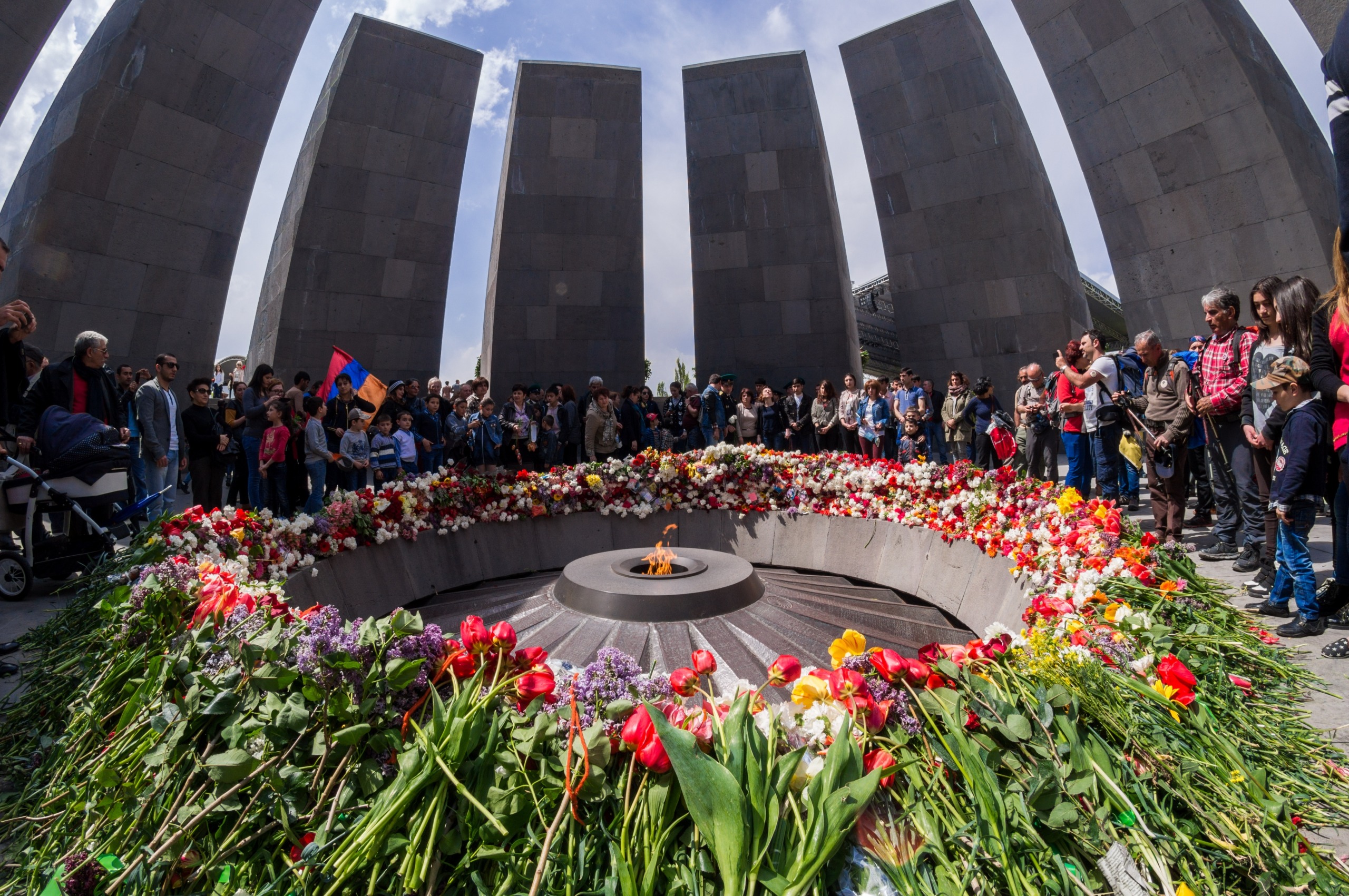
Mémorial du génocide arménien
À Erevan, le complexe de Tsitsernakaberd associe monument circulaire, flèche de 44 mètres et musée souterrain dédiés à la mémoire du génocide arménien de 1915.
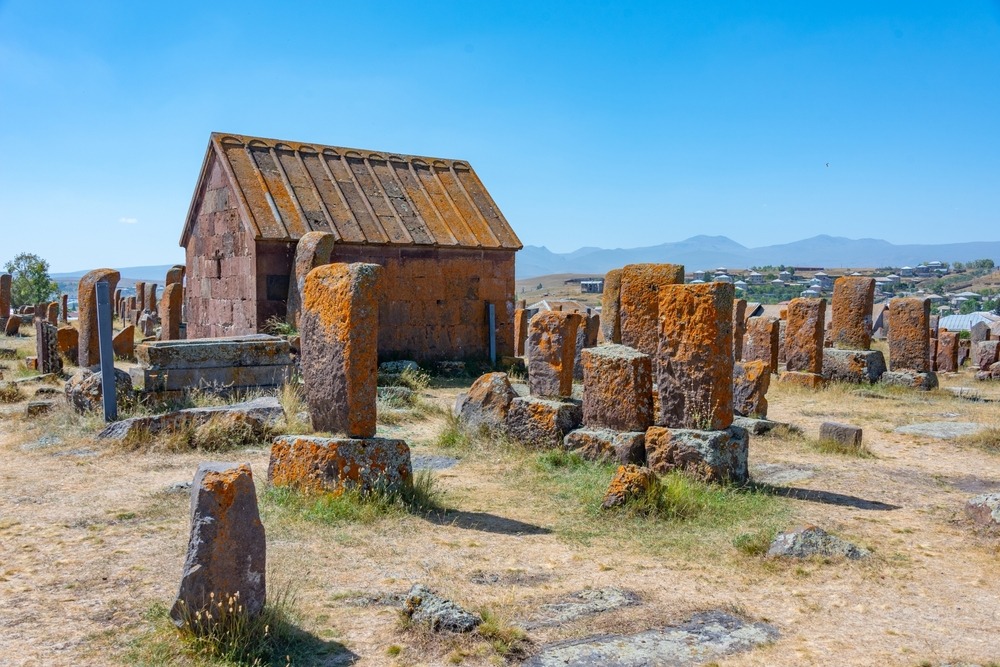
Cimetière de Noradouz ( Noratus )
Plus grand cimetière de khatchkars conservé au monde, Noratus rassemble plus de 900 croix de pierre sculptées du Xe au XVIIIe siècle, près du lac Sevan.
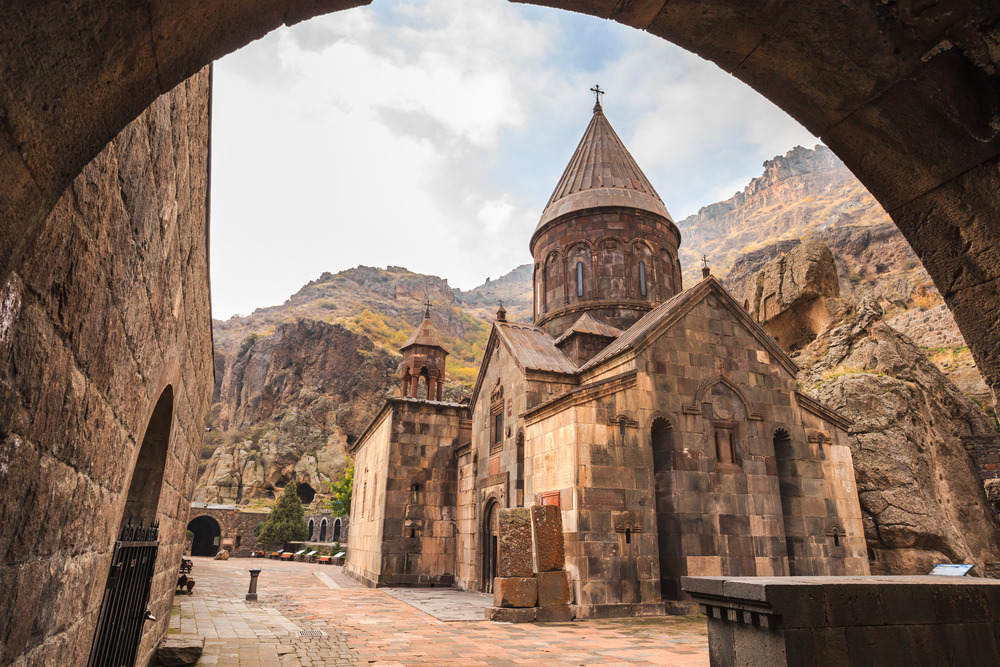
Monastère de Geghard
À 40 km d'Erevan, le monastère rupestre de Geghard, classé UNESCO, conjugue chapelles taillées dans la falaise, reliques médiévales et vallée de l'Azat.
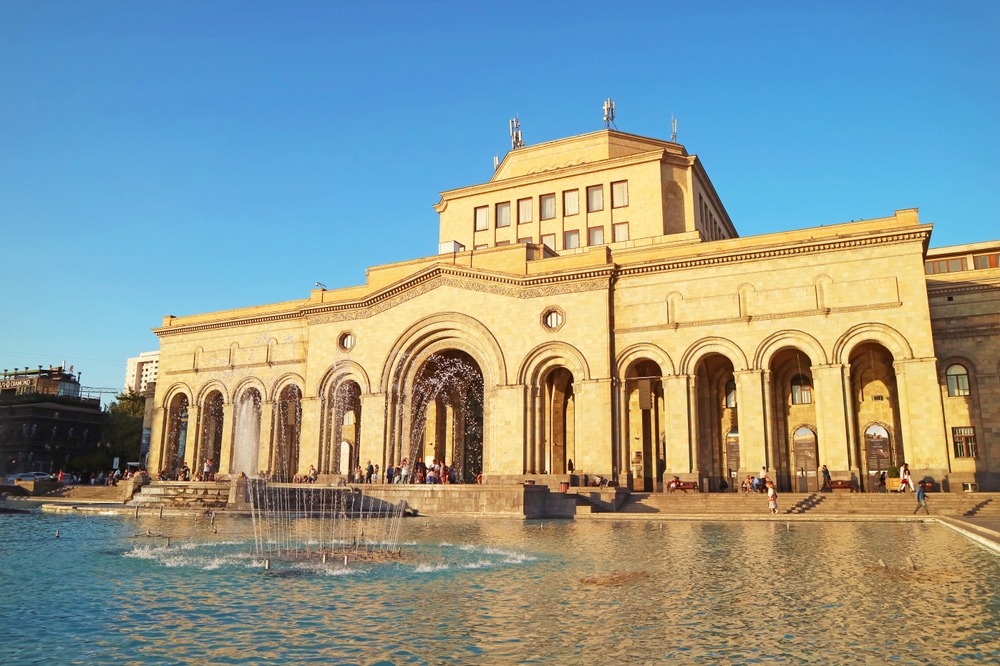
Musée d'Histoire de l'Arménie d'Erevan
Sur la place de la République à Erevan, le Musée d'Histoire de l'Arménie rassemble plus de 90 000 objets, de la préhistoire à l'époque contemporaine.
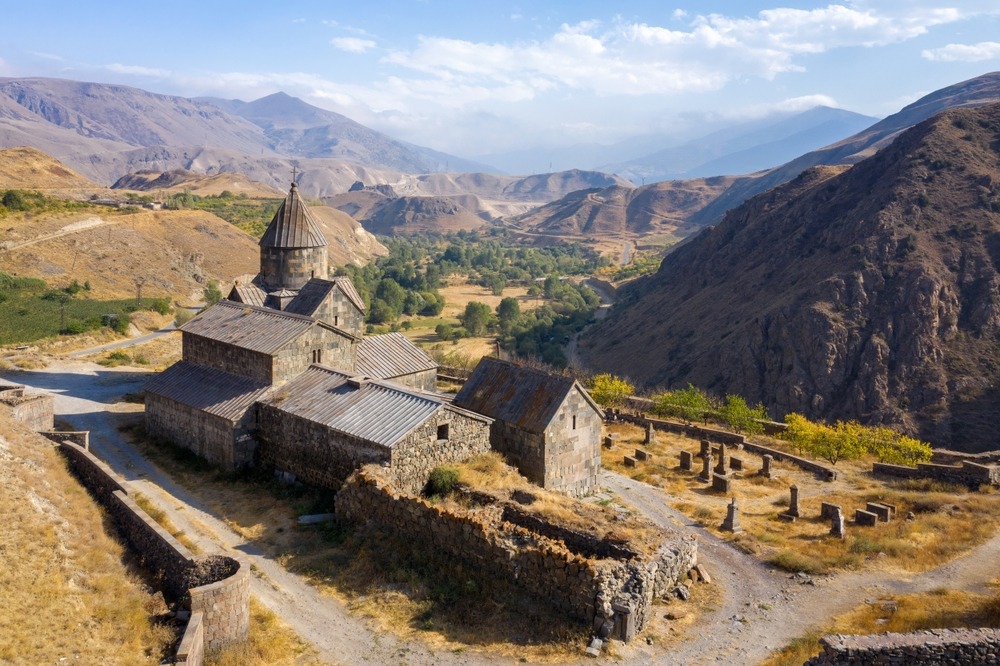
Monastère d'Hovannavank
À une trentaine de kilomètres d'Erevan, Hovannavank surplombe le canyon du Kasakh et réunit une église primitive et une cathédrale zakaride du XIIIe siècle.
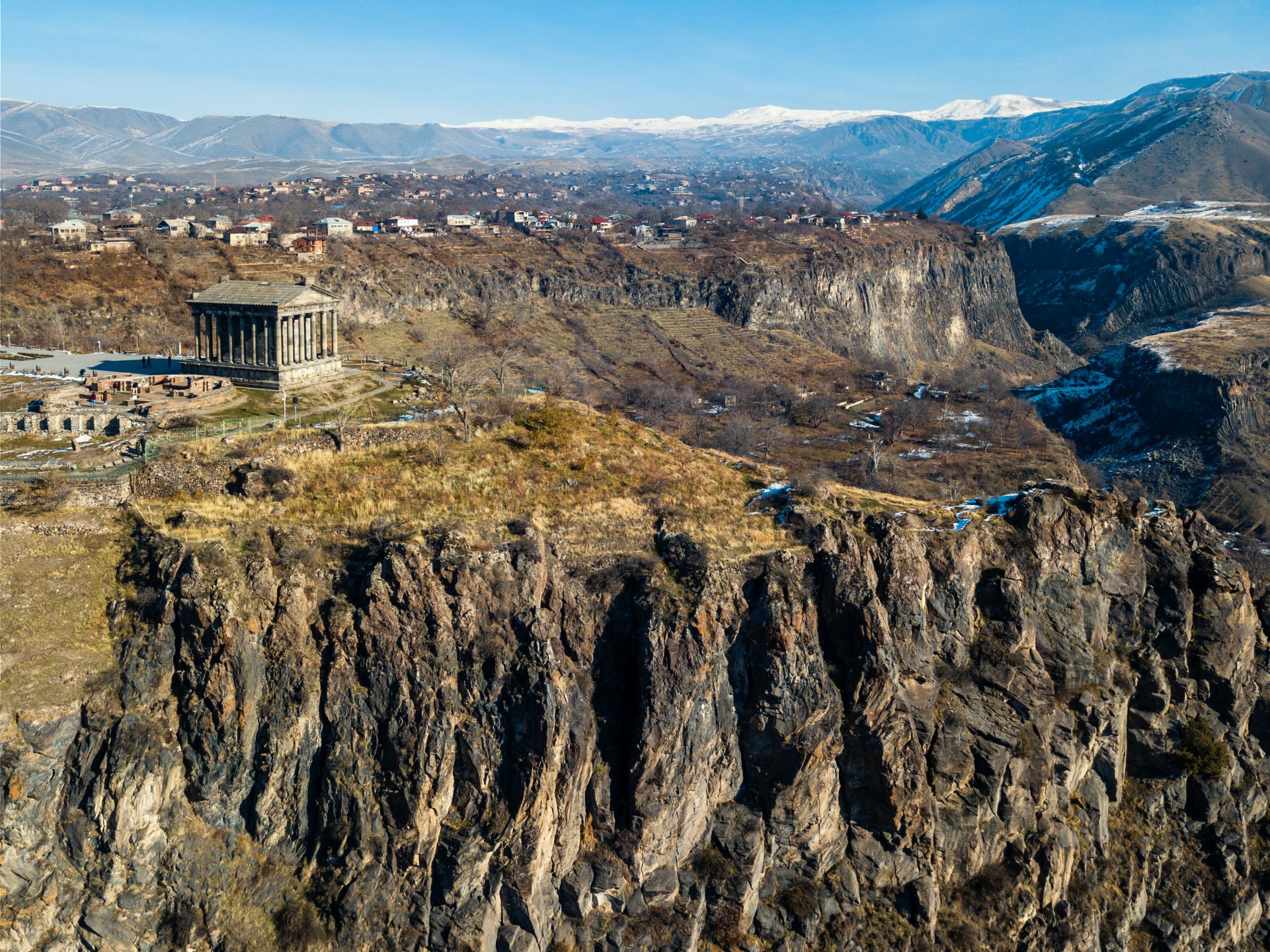
Temple de Garni
À 30 km d'Erevan, le temple de Garni est le seul vestige païen d'Arménie. Sanctuaire gréco-romain reconstruit dans les années 1970, dominant la gorge de l'Azat.
Want to discover this destination?
Our local advisors design your tailor-made trip.