Yerevan and Mount Ararat
Pink capital at 990 meters altitude and wine plain backed by Mount Ararat: the logistical hub of any Armenian journey, between UNESCO monasteries and wine cellars.
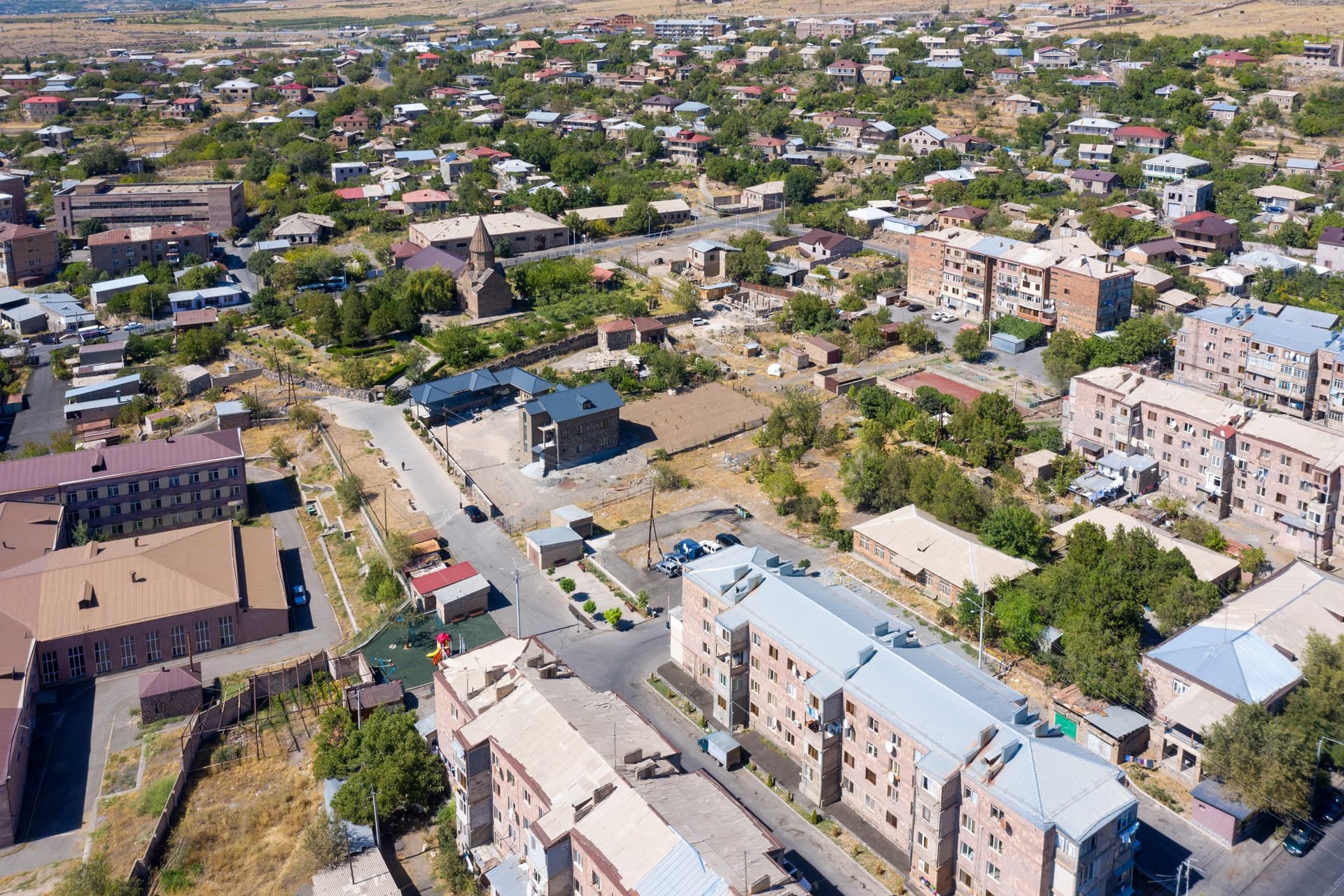
Yerevan sprawls across the Ararat plateau at 990 meters elevation, framed by the Hrazdan river gorges to the west and the foothills of Mount Aragats to the north. The city was redesigned in the 1920s by architect Alexander Tamanyan, who gave it its radial layout around Republic Square and its distinctive rosy ochre hue, derived from volcanic tuff quarried from Ani Pemza. From the steps of the Cascade or the terrace of the Cafesjian museum, on clear days we glimpse the twin silhouettes of Greater and Lesser Ararat, 60 kilometers to the south, beyond the Turkish border closed since 1993.
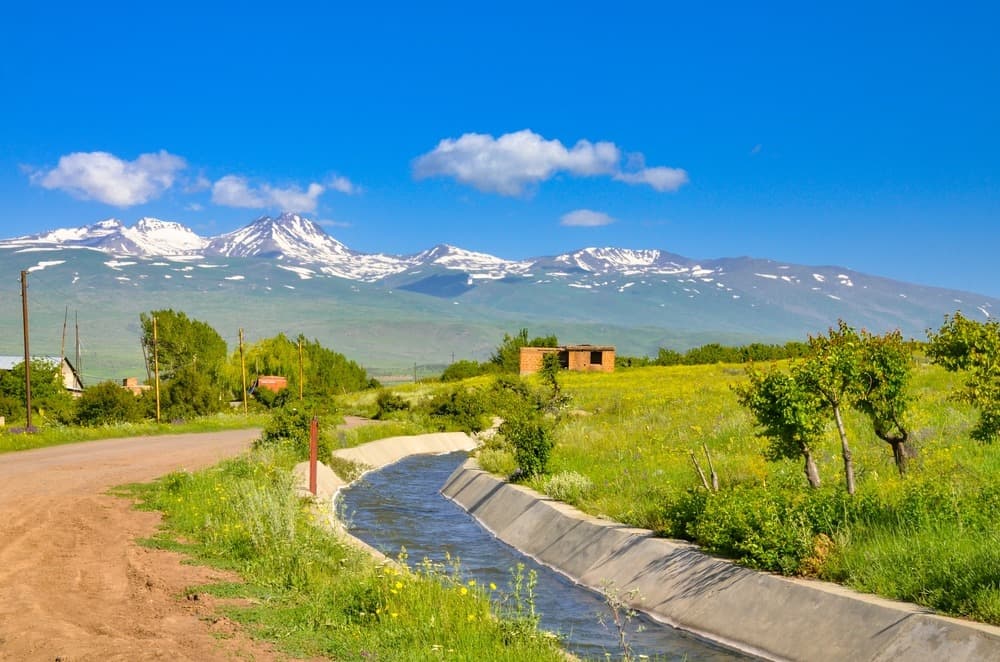
The Ararat plain, irrigated by the Araxes river, is the country's agricultural heartland. Apricot orchards yield the emblematic fruit of Armenian cuisine, transformed into jams, brandy, and soudjoukh with walnuts. Further east, Ararat province concentrates Armenian cognac distilleries, with the Ararat house founded in 1887 remaining the most renowned. Vineyards from the Aghavnadzor and Ashtarak regions produce local varieties such as Areni Noir and Voskehat. At table, this is where khorovats is savored—pork or lamb skewers grilled over vine shoots, paired with lavash, thin bread baked in a tonir, an underground clay oven inscribed on the UNESCO heritage list.
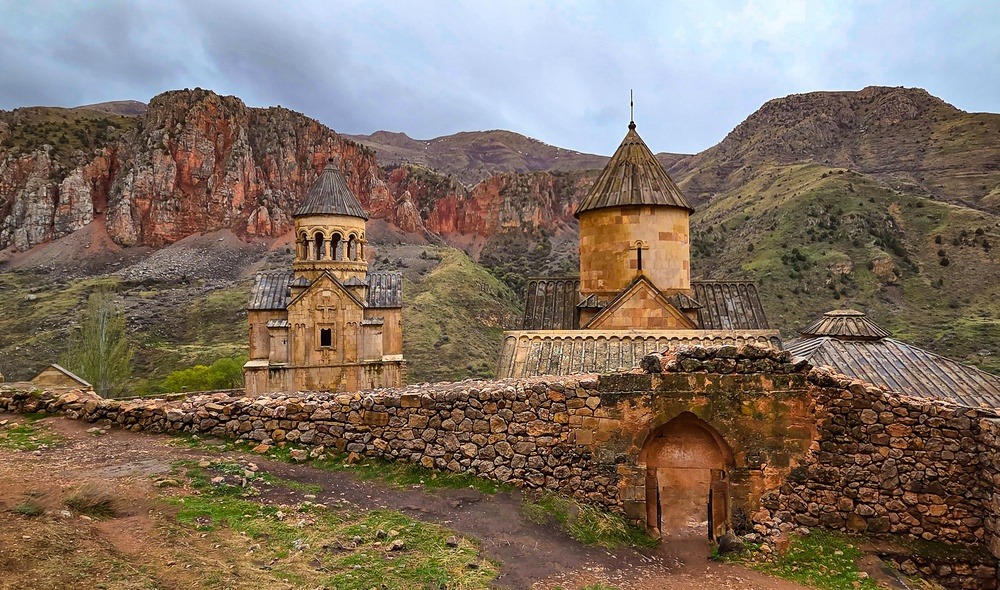
Forty kilometers south of Yerevan, Khor Virap monastery stands atop an isolated butte at the foot of Ararat. Here Saint Gregory the Illuminator was imprisoned for thirteen years in a pit before converting King Tiridates III to Christianity in 301, making Armenia the first Christian nation in history. The classic photograph—monastery in the foreground with snow-capped Ararat beyond—is best taken in the morning, before heat haze rises. Moving eastward, the Azat gorge shelters the Temple of Garni, the only Greco-Roman structure preserved in the Caucasus, reconstructed in 1975 after the 1679 earthquake, and then Geghard monastery, carved directly into the cliff face and UNESCO-listed.
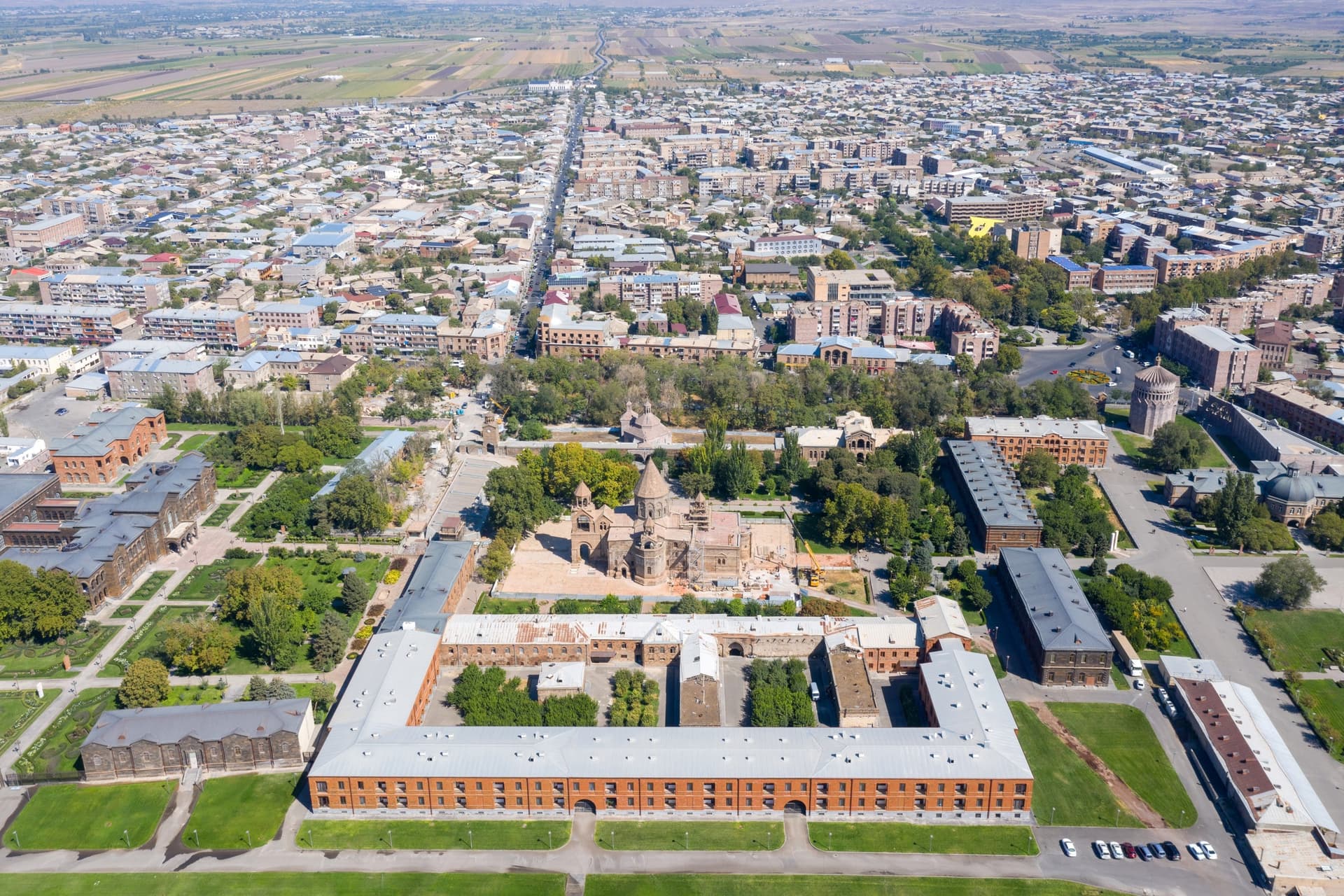
West of Yerevan, the Echmiadzin plain hosts the seat of the Catholicos of all Armenians and the fourth-century cathedral, considered the oldest Christian cathedral in the world. The ruins of Zvartnots, an ancient circular church with three stories that collapsed in the tenth century, testify to the architectural audacity of seventh-century Armenian builders. The Tsitsernakaberd genocide memorial, perched on a hill above the city, and its accompanying museum-institute, are essential for understanding twentieth-century Armenian history. We typically spend half a day here, combined with the Matenadaran, the ancient manuscript repository preserving over 17,000 codices.
Yerevan's life concentrates around Kentron, the center, with its sidewalk cafés on Saryan Street, wine cellars where you can taste Areni from Vayots Dzor, and the GUM covered market for dried fruits, spices, and cheeses from Lori. In the evening, the musical fountains of Republic Square animate from April through October. This blend of an open capital at human scale with 1.1 million inhabitants and an agricultural plain backed by Ararat makes this region the logical base for any Armenian journey.
Must-see
Khor Virap facing Ararat. Seventh-century monastery perched on a promontory at the Turkish border, where Saint Gregory the Illuminator was imprisoned for thirteen years. Full frontal view of Ararat in the morning, before heat haze.
Geghard and the Azat gorge. Medieval monastery partially carved into rock, UNESCO-listed. Sunday morning liturgical chants echo through the cave chapels hollowed in the thirteenth century.
Pagan Temple of Garni. The only Greco-Roman structure preserved in the Caucasus, dedicated to Mihr in the first century. Below, the symphony of stones—hexagonal basalt pipes formed by the cooling of lava flows.
Matenadaran and ancient manuscripts. Repository of 17,000 manuscripts including medieval scientific treatises, illuminated gospels, and the largest Armenian manuscript weighing 28 kilos. Guided tour of one and a half hours recommended.
Wine cellars on Saryan Street. About twenty addresses concentrated over 400 meters to taste black Areni from Vayots Dzor and white Voskehat. A typical Yerevan evening between 8 p.m. and midnight.
When to visit
The Yerevan plain has a dry continental climate with sharp seasonal swings. The best windows are May-June, when apricot and cherry orchards bloom and temperatures range between 18 and 26°C, and September-October, the Areni harvest season with daytime highs of 22-25°C and cool evenings. July and August are hot, 33 to 38°C during the day, sometimes 40°C, making visits to exposed sites like Zvartnots or Khor Virap challenging between noon and 4 p.m.
Winter is dry and cold, ranging from -5 to 5°C from December through February, with possible but limited snowfall in the plains. Ararat remains visible more often than in summer, with cleaner air less laden with agricultural dust. March and November are transitional months, with variable days and a higher likelihood of cloud cover obscuring Ararat.
Practical advice
We recommend three to four full days in this region: one day for Yerevan itself (Matenadaran, Cascade, Tsitsernakaberd, GUM market), one day for the Garni-Geghard loop, one day for Khor Virap-Echmiadzin-Zvartnots, and ideally a half day for wine cellars or the history museum. Zvartnots international airport, 12 kilometers from the center, is the country's entry point and the logistical base for all our itineraries.
The Yerevan region naturally combines with Vayots Dzor to the south, 1.5 hours by road via the M2 highway, then Syunik and Tatev further south for travelers with ten days or more. To the north, Lake Sevan is one hour away, Lori and Tavush 2.5 hours. Hotel comfort in Yerevan is good, with 3 to 5-star establishments in the center. This region suits all profiles: culture travelers, wine and gastronomy enthusiasts, families with children thanks to short distances. Hikers will find more to their liking further north or south.