Matenadaran
Matenadaran
The Institute of Ancient Manuscripts in Yerevan, the Matenadaran houses over 17,000 Armenian and foreign manuscripts, inscribed in UNESCO's Memory of the World register since 1997.
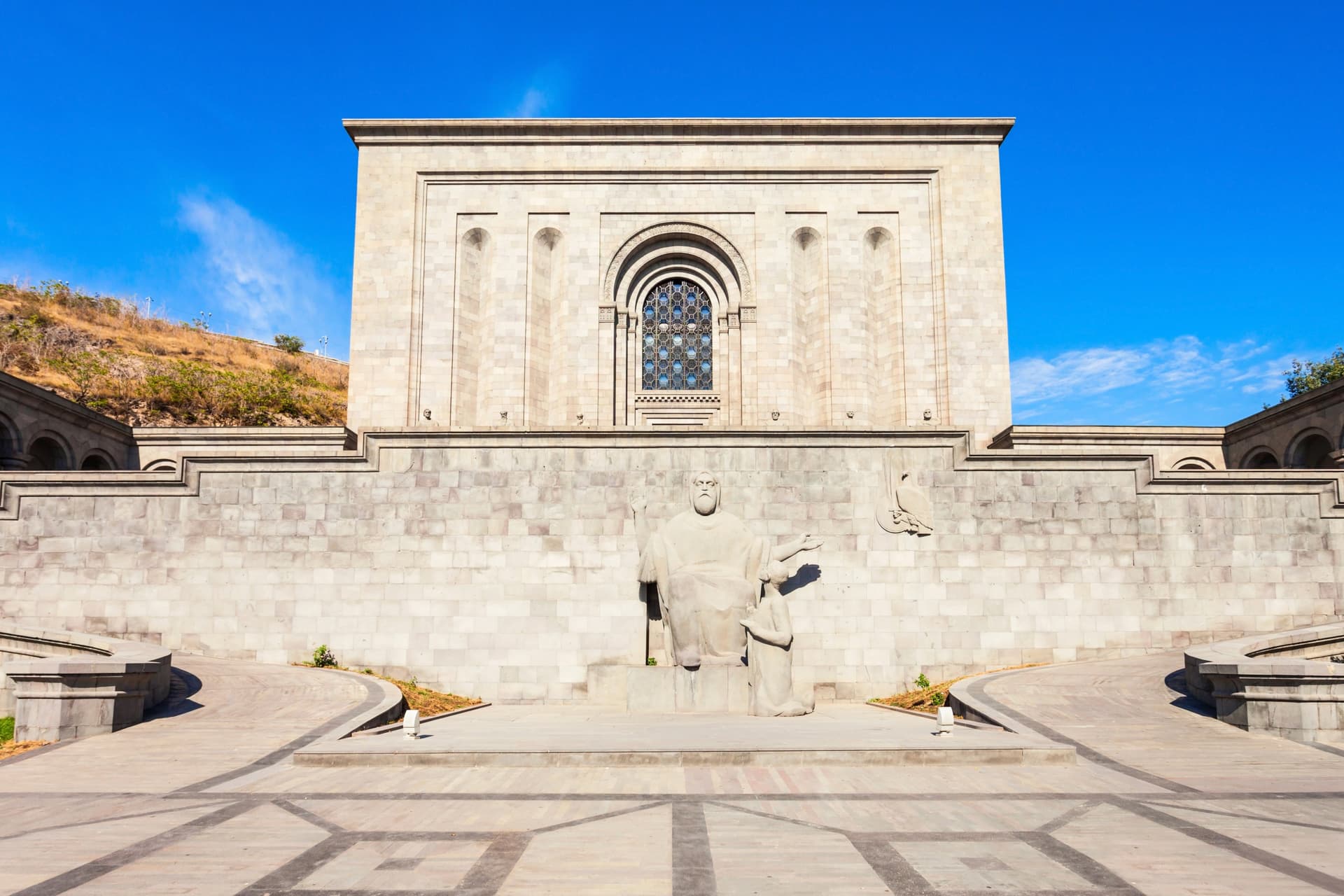
The Matenadaran, located in Yerevan, is Armenia's national institute of ancient manuscripts. It preserves over 17,000 manuscripts and approximately 300,000 archives, a significant portion of which documents medieval Armenian culture and translations of ancient authors. Inscribed in UNESCO's Memory of the World register since 1997 under the name "Collection of Ancient Manuscripts of the Matenadaran Mashtots," it occupies a cubic building of gray-blue basalt at the northern end of Mesrop Mashtots Avenue.
Why visit the Matenadaran
The Matenadaran brings together in one place three dimensions rarely combined: one of the world's most important manuscript collections, an active research center in Armenology, and an emblematic example of neo-Armenian architectural style from the 1950s-1960s.
For visitors, the primary interest lies in the public display of foundational pieces: fragments from the 5th-6th centuries, the earliest known Armenian illuminated manuscripts, medieval scientific works, translations preserving Greek texts now lost in their original form. The visit thus illuminates an essential chapter in the intellectual history of the Caucasus and Eastern Mediterranean.
History of the Institution
The modern Matenadaran's history traces back to 405, the year Mesrop Mashtots created the Armenian alphabet. The first matenadaran ("manuscript repository") is attested in Etchmiadzin from the 5th century by historian Lazare of Pharbe. The institution expanded in 1441 when the Catholicosate of the Armenian Apostolic Church relocated from Sis to Etchmiadzin.
Looting and dispersal marked the following centuries, the last major episode occurring in 1804. After Eastern Armenia's incorporation into Russia in 1828, activity resumed: the first catalogs appeared in 1840 and 1863, cataloging 312 and 2,340 manuscripts respectively.
In the early 20th century, collections were sent to Moscow during World War I for protection; they returned only in 1922. In 1920, under Soviet rule, the Matenadaran became public property, allowing the aggregation of collections from Moscow and Tiflis. Manuscripts were transferred to Yerevan in 1939 and the institution received its official name, Institute of Ancient Manuscripts, in 1959. The periodical The Messenger of the Matenadaran then established its role as a scientific reference.
The most recent expansion—an annex building of 12,100 m² with groundbreaking on May 14, 2009 and inauguration on September 20, 2011—has made the Matenadaran the world's largest international center for Armenology and medieval studies.
What You Can See
Emblematic Manuscripts
The collection comprises 10,000 Armenian manuscripts, approximately one-third adorned with ornaments and illuminations. Several pieces structure the visit:
- Fragments from the 5th-6th centuries, among the oldest surviving texts in Classical Armenian.
- The Etchmiadzin Gospels, featuring some of the earliest known Armenian illuminations.
- The Lazarian Gospel of 887, considered the oldest complete Armenian manuscript in existence.
- The Homiliary of Mouch (1200-1202), the collection's largest manuscript.
- A calendar from 1434, the collection's smallest manuscript.
Alongside these pieces, the institute preserves texts in Greek, Latin, Arabic, Persian, Syriac, Hebrew, and Ethiopic. It also houses Armenian translations of ancient works whose originals are lost, such as the Chronicle of Eusebius of Caesarea or the treatise On Nature by Zeno of Citium.
Architecture and Décor
The cubic gray-blue basalt building exemplifies neo-Armenian style, positioned below the Monument to the Mother of Armenia. A monumental staircase leads to the statue of Mesrop Mashtots accompanied by his disciple Korioun kneeling, a work by Ghoukas Choubarian (1962).
The entrance is framed by six statues of Armenian intellectual figures: Toros Roslin, Gregory of Tatev, Anania of Shirak, Moses of Khorene, Mkhitar Goch, and Frik. Above is inscribed an Armenian text: "Ճանաչել զիմաստութիւն եւ զխրատ, իմանալ զբանս հանճարոյ"—"To know wisdom and instruction, to understand words of insight."
The side facades are decorated with khachkars (stone crosses) and steles. Inside, a mosaic by Hovhannès Khachaturian illustrates the Battle of Avarayr (451); the main staircase features a triptych by the same artist dedicated to the Urartian era, the creation of the alphabet, and the Hellenistic precursors of Mashtots. An atomic shelter had been carved into the hillside behind the building; today it is unusable due to water infiltration.
Practical Information
- Duration: allow 1 to 2 hours to walk through the main exhibition halls.
- Admission: moderate fee, with additional charges for guided tours and access to specific collections.
- Opening hours: open weekdays and Saturday, closed Sunday and Monday (check the official website before your visit, as seasonal hours vary).
- Photography: permitted in exhibition halls without flash. Professional photography may require authorization.
- Guided tours: available in Armenian, Russian, English, and English-speaking groups, by prior reservation.
How to Get There
The Matenadaran is located at the northern end of Mesrop Mashtots Avenue, one of central Yerevan's main arteries. From Republic Square, allow 20 to 25 minutes on foot heading up the avenue, or approximately 10 minutes by taxi. The nearest metro station is Yeritasardakan, a 15-minute walk away. Several marshrutka (minibus) lines serve the avenue.
The site combines easily with a visit to the nearby Cascade complex and park, located a few hundred meters to the southeast.
Nearby
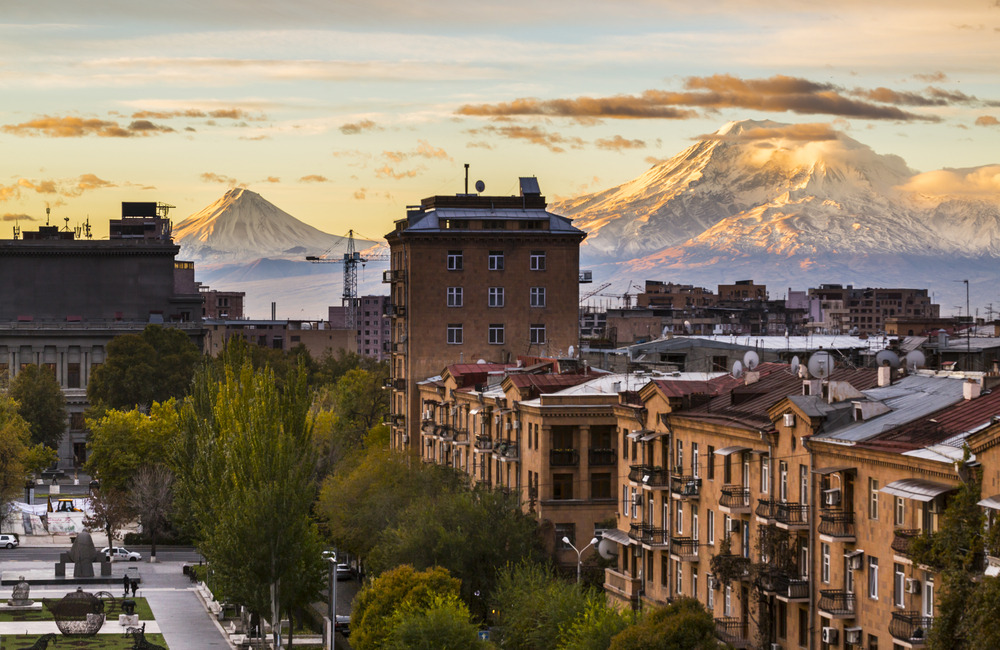
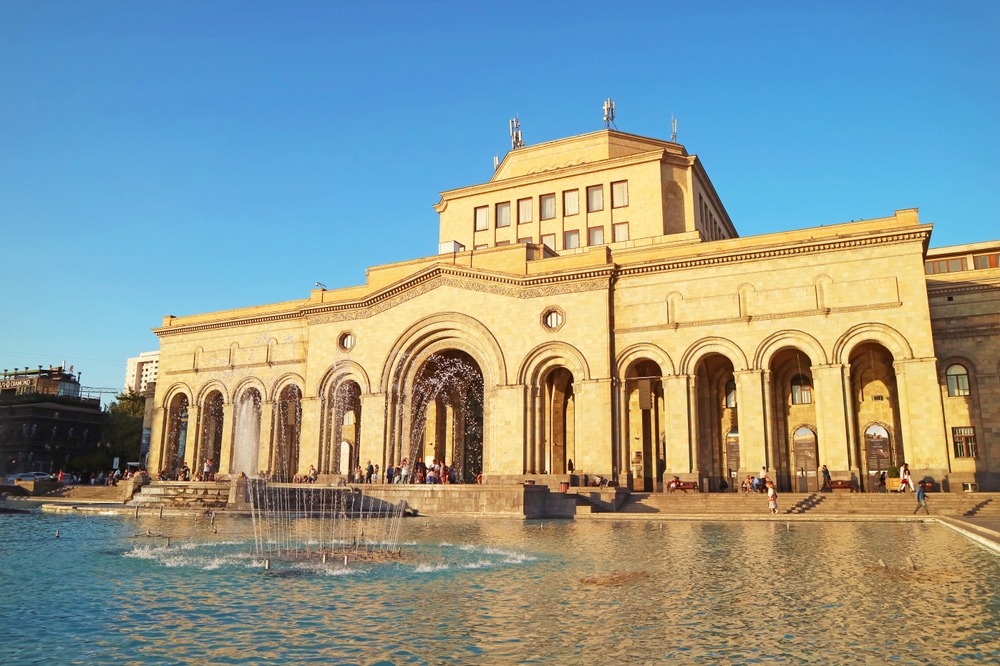
The Matenadaran sits within a sector rich in Yerevan monuments: the statue of the Mother of Armenia dominates the hill just above, the Cascade complex and its Cafesjian art center are nearby, as are Republic Square and its museums.
To further explore Armenian religious and architectural heritage, several sites complement the visit well:
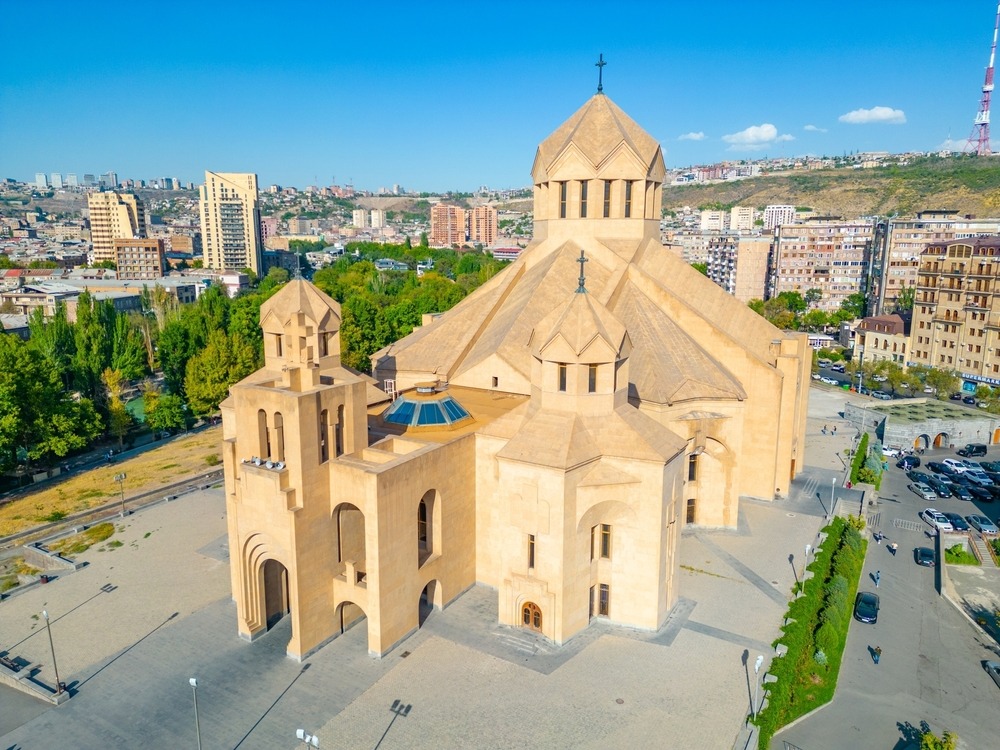
- The Cathedral of Saint Gregory the Illuminator, Yerevan's principal cathedral.
- The Goshavank monastery, a medieval ensemble renowned for its khachkars.
- The Karmravor Church in Achtarak, among Armenia's oldest Christian structures.
- The village of Areni, celebrated for its vineyards and prehistoric cave.
Frequently Asked Questions
Frequently asked questions
Photography without flash is generally permitted in exhibition halls. Reproduction for scientific or professional use requires a request to the administration.
Yes, English-speaking guides are available at the Matenadaran. Advance reservation is recommended, especially during peak season or for groups.
Access to manuscript and archive collections is open to researchers on application. A motivated request should be directed to the institute's scientific director, who also maintains a dedicated reading room.
1 to 1.5 hours suffice to tour the main exhibition halls. Allow 2 hours or more if you take a detailed guided tour or wish to explore the maps room and temporary exhibitions.
The monumental entrance staircase is imposing, but adapted access exists for visitors with reduced mobility. It is helpful to notify staff upon arrival to be directed to the appropriate entrance.
Including the Matenadaran in an Armenia Trip
The Matenadaran is an essential stop for understanding the historical depth of Armenian culture, complementing Armenia's great monasteries and Caucasus landscapes. To build an itinerary combining Yerevan, its museums, and the country's heritage sites, explore our tailor-made Armenia trips.
Nearby
Interested in this visit?
We can include it in your personalised itinerary.