Haghpat Monastery
Haghpat Monastery
Founded in 976 and UNESCO-listed, Haghpat Monastery overlooks the Debed Valley in northern Arménie. Churches, bell tower, khachkars and scriptorium.
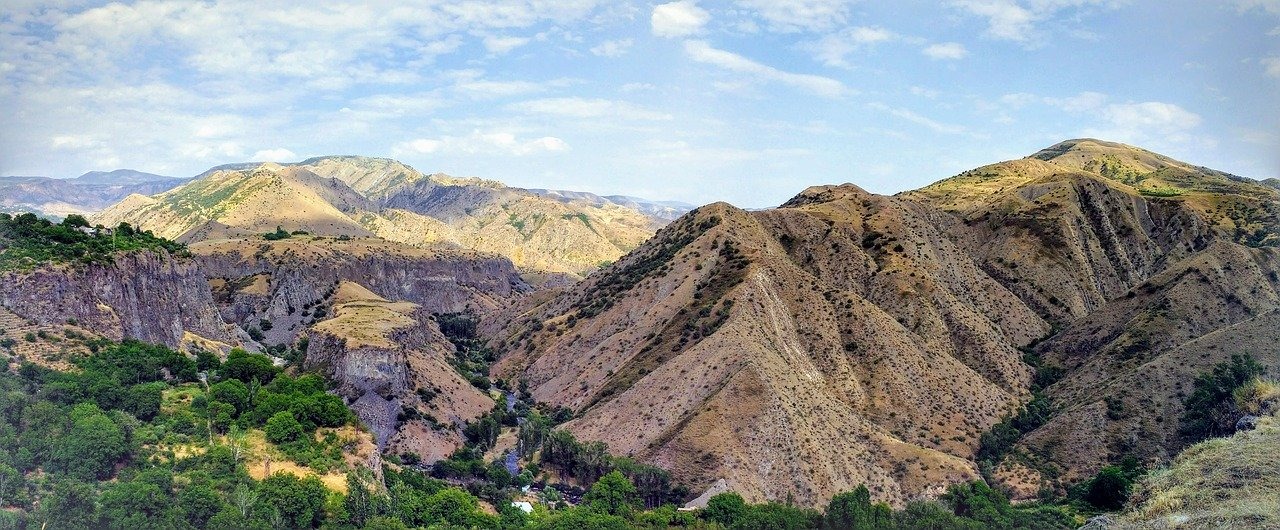
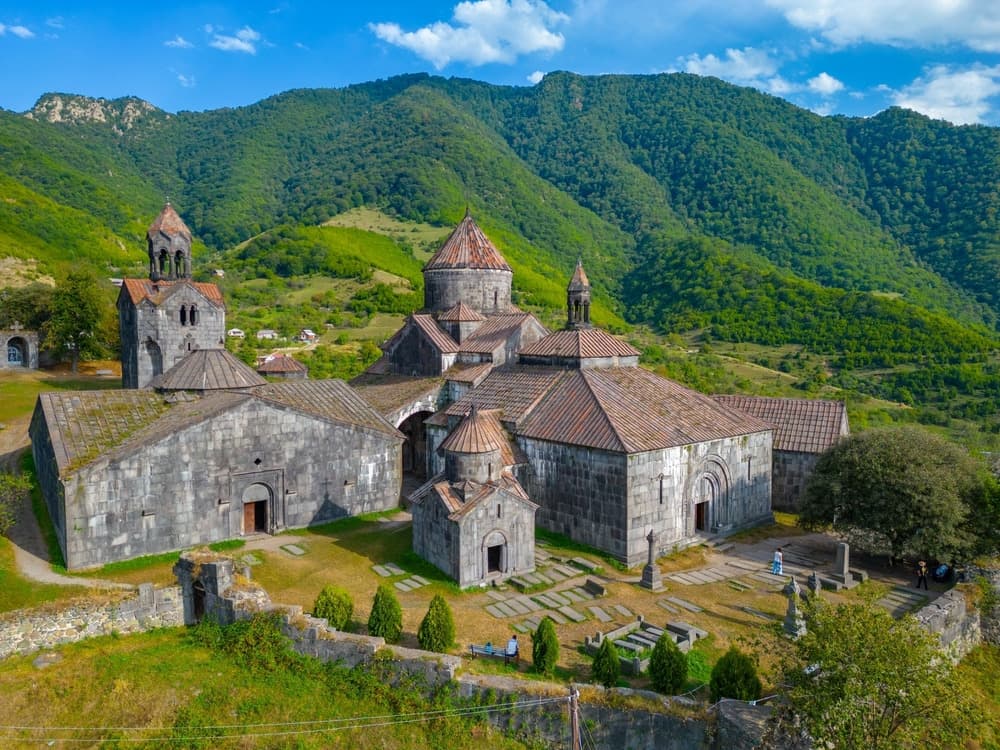
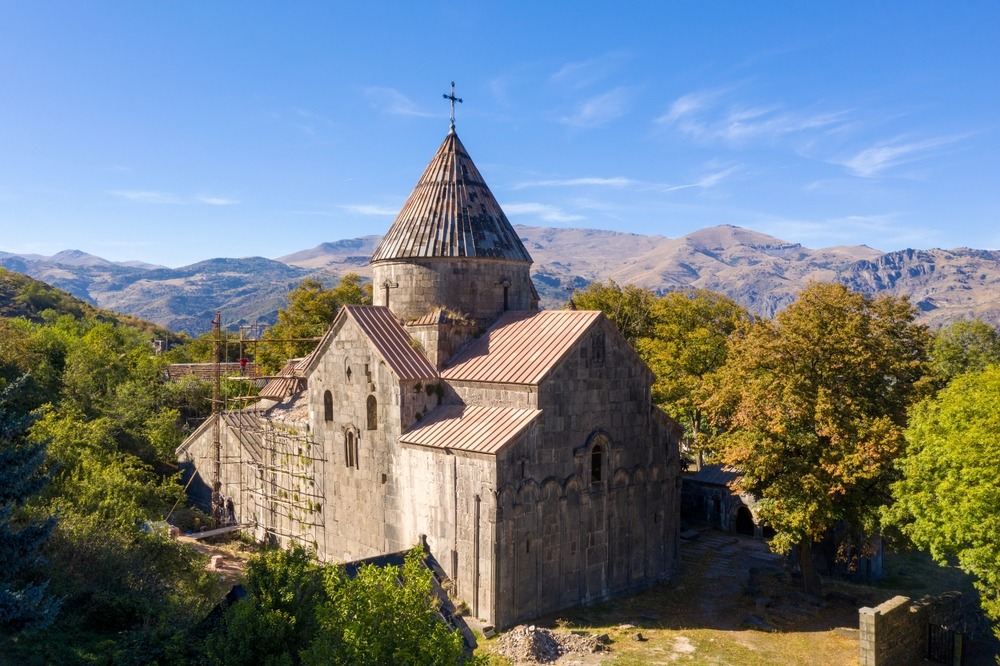
Haghpat Monastery overlooks the Debed River Valley from a plateau in the Lori region, northern Arménie, near the Georgian border. Founded in the late 10th century, it forms with its neighbour Sanahin a complex inscribed on the UNESCO World Heritage List. Domed churches, scriptorium, a bell tower from 1245, sculpted khachkars and a monumental refectory compose a complex that was, throughout the Middle Ages, one of the principal intellectual and religious centres of the Bagratid kingdom.
Why visit Haghpat Monastery
Haghpat ranks among the major sites of medieval Armenian architecture, alongside Sanahin, Goshavank and Tatev. The ensemble has been inscribed on the UNESCO World Heritage List since 1996, with the listing extended to Sanahin in 2000. On a single plateau, you traverse several centuries of monastic history: churches from the 10th and 13th centuries, funerary chapels, a manuscript repository, a three-storey bell tower and a major khachkar sculpted in 1273.
Unlike other more frequented sites, the atmosphere here remains that of a rural village; the buildings coexist with the houses and gardens of Haghpat, without fencing or marked trails.
History and Foundation
The monastery was founded in 976 by Bagratid king Ashot III the Merciful and his wife Khosrovanouch. It quickly became a major religious and intellectual centre, thriving under Armenian sovereigns and later the Zakarids, before experiencing several periods of decline due to invasions and earthquakes.
Two legends explain its name. The first features a master builder and his son in conflict over the construction of Sanahin, the neighbouring monastery: admiring the wall's solidity, the father allegedly exclaimed "Akh Pat" ("solid wall"), an expression that became the place name. Another tradition links "Haghpat" to the idea of "he who hates evil", in reference to the purity of the sacred site.
What to See on the Site
The Churches
The main edifice is the Church of Saint-Nshan (Sourb Nshan, "Holy Cross"), the oldest in the complex, built at the initiative of Queen Khosrovanouch. Its gable bears a bas-relief depicting the royal sons Smbat and Kiurike presenting a model of the church. The complex also includes the Church of Sourb Grigor, a small domed building, and the Church of the Mother of Mary. Two side chapels complete the ensemble: the Hamazasp House and the Chapel of Sourb Astvatsatsin.
Burials and Funerary Chapels
The sepulchre of the Ukaniants family, formed of three rectangular chapels adorned with khachkars, constitutes the most remarkable funerary ensemble. The covered corridors of the monastery also house numerous flat tombstones, which you can explore freely.
The Book Repository (matenadaran)
Built in the 11th century and rebuilt in the 13th, the scriptorium was the intellectual heart of Haghpat. Monks and scribes wrote and preserved illuminated manuscripts here; several have survived and are now displayed at the Matenadaran in Yerevan.
The Bell Tower
Erected in 1245, the bell tower extends over three storeys, animated by twin windows and decorative columns. It ranks among the best-preserved examples of Armenian monastic campaniles from the 13th century.
The Khachkars
The site houses several sculpted stone crosses. The most famous is the Amenaprkich khachkar ("Almighty Saviour"), dated 1273 and signed by master craftsman Vahram. It depicts the crucifixion, surrounded by the Virgin Mary, Mary Magdalene, angels and apostles.
The Refectory
An imposing building near the churches, the refectory could accommodate up to 270 monks. Its dimensions give a clear sense of the community that lived here at the monastery's height.
Practical Information
- Admission: free, open access year-round.
- Duration of visit: allow 1 to 2 hours to tour the complex and surroundings.
- Dress code: modest attire recommended for entering the churches; silence required during services.
- On site: stalls selling local products (wine, brandy, crafts) and a hotel-restaurant facing the site, convenient for a break.
When to Visit
The monastery can be visited year-round. Peak tourist season runs from June to September, with increased local attendance on weekends. For a quieter visit, choose weekdays or shoulder seasons (May, late September, October).
Winter is possible, but Haghpat is situated at altitude in northern Arménie: expect cold conditions and, depending on the year, snow on the access road.
How to Get There
The village of Haghpat is administratively part of Alaverdi, the capital of the Lori region, about ten kilometres away.
- From Yerevan: marshrutka (shared minibus) to Alaverdi (approximately 3.5 to 4 hours), then connection to Haghpat. Local departures between Alaverdi and the village are irregular.
- From Vanadzor: regular marshrutkas to Alaverdi, then taxi or marshrutka to Haghpat.
- By taxi: the simplest option from Yerevan or Vanadzor, at a negotiable rate depending on season; preferable if you wish to combine Haghpat and Sanahin in one day.
What to See Nearby
- Sanahin: sister monastery to Haghpat, about ten kilometres away, inscribed in the same UNESCO listing. A combined visit of both sites makes most sense.
- Alaverdi: industrial town in the Debed Valley, convenient departure point and gateway to the Lori region.
- Goshavank: another major medieval Armenian monastery, further south, famous for its finely sculpted khachkars.
- Matenadaran in Yerevan: institute of ancient manuscripts, where several works from Haghpat's scriptorium are preserved.
Frequently Asked Questions
Frequently asked questions
Yes. Haghpat has been inscribed on the UNESCO World Heritage List since 1996. The site was extended in 2000 to include the neighbouring monastery of Sanahin, under the name "Monasteries of Haghpat and Sanahin".
Allow approximately 1 to 2 hours on site to explore the churches, scriptorium, bell tower and funerary chapels. If you combine with Sanahin, plan a half-day to a full day from Alaverdi.
No, access to the site is free and open year-round. No official hours are posted; it is advisable to arrive in the morning, after 9 a.m., to ensure the churches are open.
The two monasteries, contemporaneous and about ten kilometres apart, share the same Bagratid architectural tradition. Sanahin is slightly older and features a remarkable academy and scriptorium; Haghpat distinguishes itself through its 1245 bell tower and the Amenaprkich khachkar. A combined visit allows you to appreciate their unique characteristics.
Planning Your Trip
Haghpat fits naturally into an itinerary in northern Arménie, between Dilijan, Vanadzor and the Georgian border. To build a complete circuit including UNESCO sites and Lori landscapes, consult our travel packages to Arménie.
Nearby
Interested in this visit?
We can include it in your personalised itinerary.