Armenia History Museum in Yerevan
Armenia History Museum in Yerevan
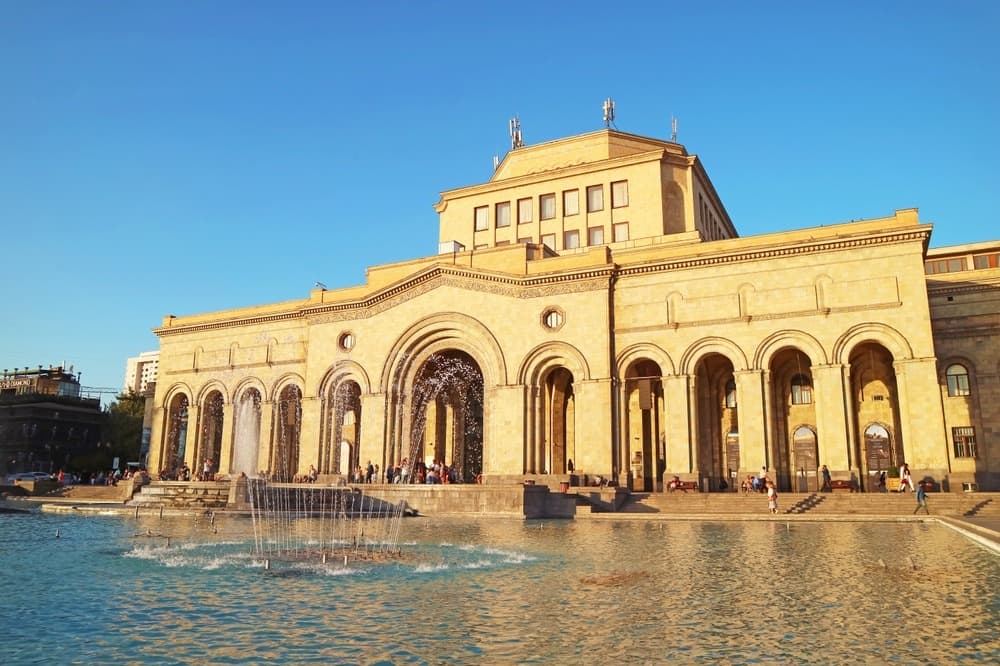
Located on Republic Square in Yerevan, the Armenia History Museum houses over 90,000 objects spanning from prehistory to the contemporary era.
On Republic Square in the heart of Yerevan, the Armenia History Museum preserves more than 90,000 objects tracing the country's past from prehistory to modern times. This is the reference heritage institution for understanding Armenia before exploring the territory itself.
Why visit this museum
Three reasons make this an essential first stop on any Armenian journey:
- A comprehensive overview: from the Neolithic to recent decades, the collections span the entire national narrative, illuminating the sites you'll visit later.
- Major pieces: the Erebuni tablet (782 BC), Urartian jewelry, and objects from the prehistoric site of Shengavit constitute first-rate archaeological references.
- Central location: situated on Republic Square, the museum fits naturally into a day of discovering central Yerevan.
History and identity of the museum
The Armenia History Museum is the country's national museum institution. It occupies the grand neoclassical building closing Republic Square on the north side, shared with the National Gallery of Armenia. Its collections, assembled throughout the 20th century, bring together major archaeological excavations conducted across Armenian territory.
Take care not to confuse it with the Museum of the History of Yerevan, a smaller institution dedicated specifically to the capital's history and located in another building on Argishti Avenue. The national museum, by contrast, covers the entire country.
What you'll see
The exhibition is organized chronologically across several floors.
Prehistory and archaeology
Pottery, obsidian tools, ritual objects. The section devoted to Shengavit, one of the region's oldest sites (4th–3rd millennia BC), illustrates the first sedentary societies of the Armenian plateau.
Urartian and ancient civilization
This is the most emblematic section. You'll find jewelry in precious metals, armor, and above all the cuneiform Erebuni tablet, dated to 782 BC, which records the founding of ancient Yerevan by King Argishti I. This document is the official birth certificate of the capital.
Middle Ages
Religious frescoes, manuscripts, printing presses, liturgical objects, and testimony to everyday life in medieval Armenian cities.
Modern and contemporary era
Furniture, textiles, traditional costumes, 20th-century objects (cameras, telephones, souvenirs from the Soviet period) that document the social transformations of Yerevan.
Temporary exhibitions
The museum regularly programs thematic exhibitions on Armenian art or national archaeological sites. Check at the reception desk for current programming.
Practical information
Address: 1 Argishti Street, Republic Square, Yerevan.
Hours: open Tuesday to Sunday, daytime hours. Closed Mondays and public holidays. Last admission approximately 45 minutes before closing.
Admission: moderate entrance fee, with reductions for students and children. Free with the Yerevan Card.
Guided tours: available in Armenian, Russian, English, French, and German, to be booked on-site or in advance. Variable surcharge depending on language and duration.
Photography: permitted without flash.
Duration of visit: allow 1.5 to 2 hours to tour all the floors. Budget more time if taking a guided tour.
Accessibility: an elevator serves the floors, though the entrance has a flight of steps.
How to get there
- On foot: from most central hotels, the museum is reachable in less than 15 minutes.
- Metro: Republic Square station, just steps from the building.
- Taxi / rideshare: local apps Yandex Go, GG, and Utaxi work well in Yerevan and remain affordable.
What to see nearby
The museum stands at the heart of a district rich in sites of interest:
- Republic Square itself, with its pink tuff buildings and musical fountains in the evening (summer).
- The National Gallery of Armenia, which occupies the upper floors of the same building.
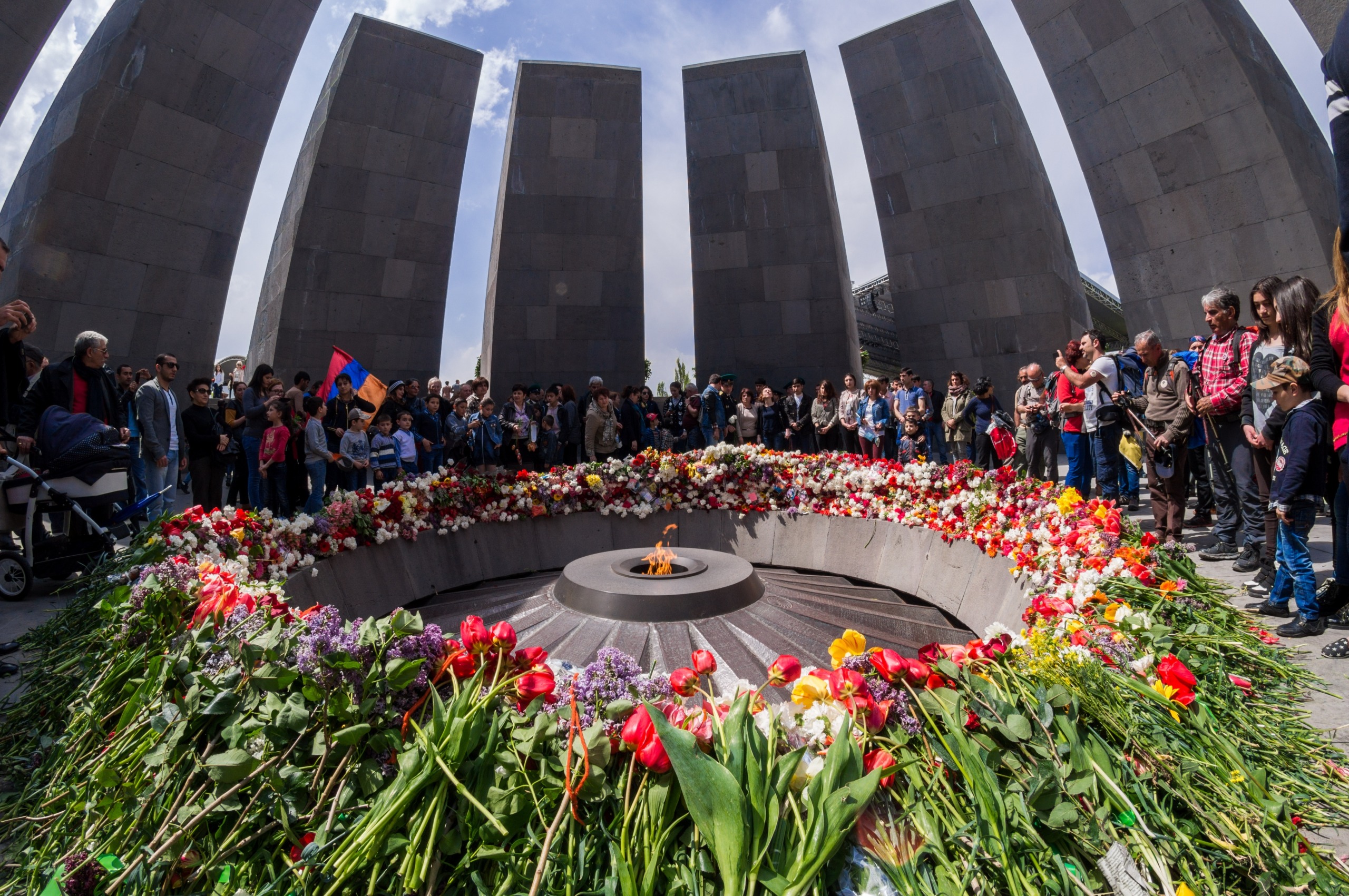
- The Armenian Genocide Memorial at Tsitsernakaberd, about 20 minutes by car.
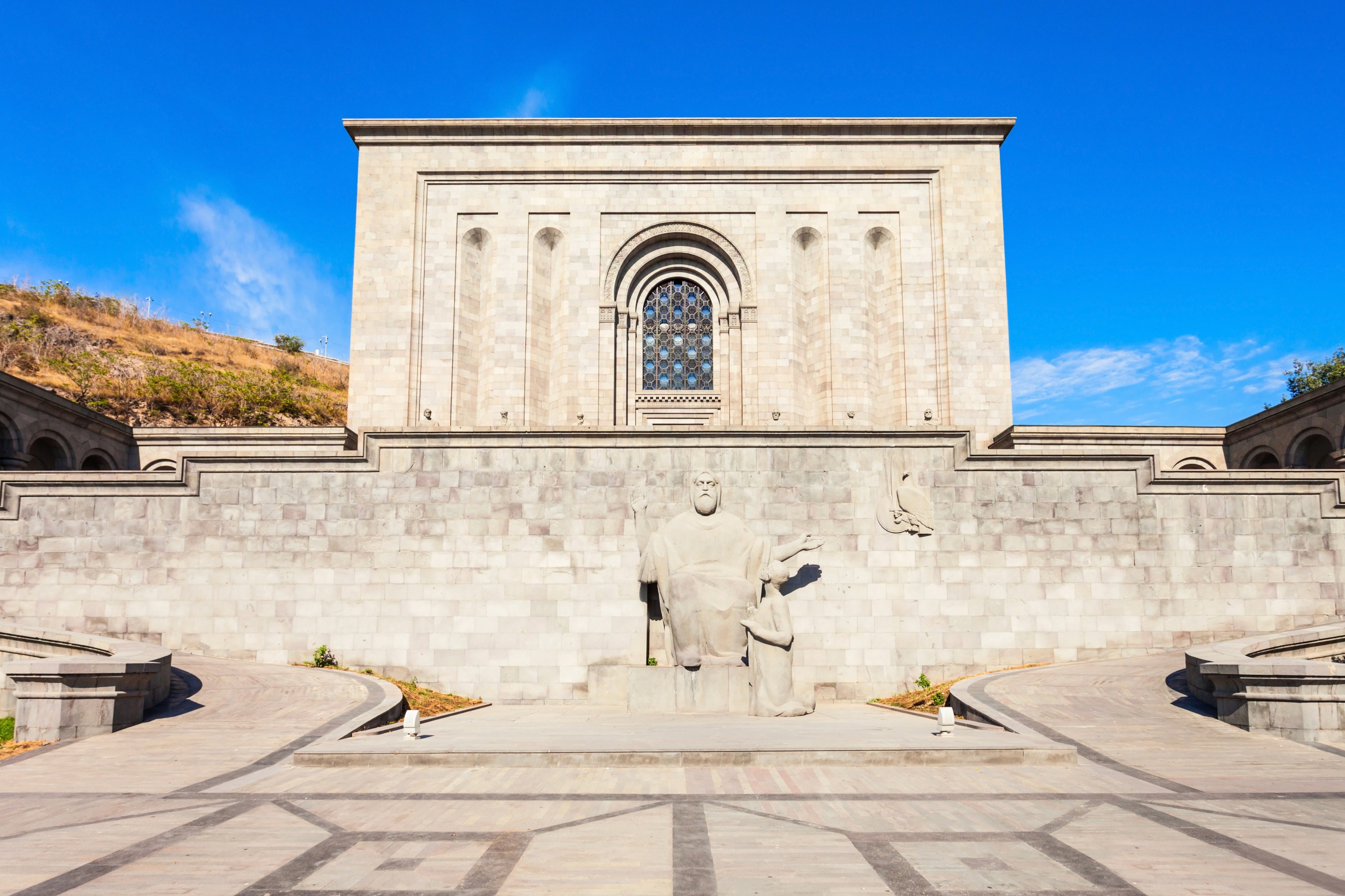
- The Armenian Alphabet Monument, further afield, accessible as a half-day excursion.
- To venture beyond the capital, the Temple of Garni can be visited as a day trip from Yerevan.
Frequently asked questions
Frequently asked questions
Allow 1.5 to 2 hours for a complete tour of the permanent collections. Archaeology enthusiasts can easily spend a half-day here, especially with a guided tour.
Labels are primarily in Armenian and English. An English-speaking guided tour is offered upon reservation, which is the best option for fully appreciating the collections.
Tickets can be purchased without difficulty on-site for a self-guided visit. Reservation is advisable for guided tours, particularly during peak summer season.
The Armenia History Museum (Republic Square) covers the entire country across all periods. The Museum of the History of Yerevan, more modest in scope, focuses solely on the capital. These are two distinct institutions.
Yes, photography is permitted without flash in most galleries. Some temporary exhibitions may, however, prohibit image-taking.
Plan your trip
The Armenia History Museum is an excellent starting point for grasping the historical depth of the country before setting out to explore its monasteries and landscapes. To build a complete itinerary, consult our trips to Armenia.
Nearby
Interested in this visit?
We can include it in your personalised itinerary.