Haghartsin Monastery
Haghartsin Monastery
Founded in the 10th century in Tavush forest, Haghartsin Monastery brings together three medieval churches and a refectory, 30 minutes from Dilijan.
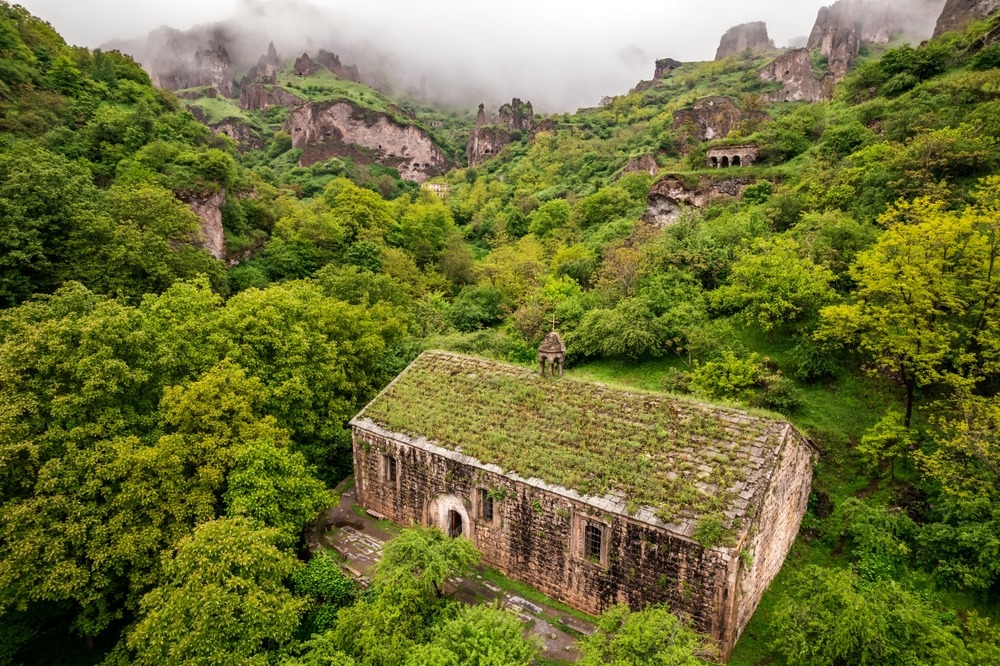
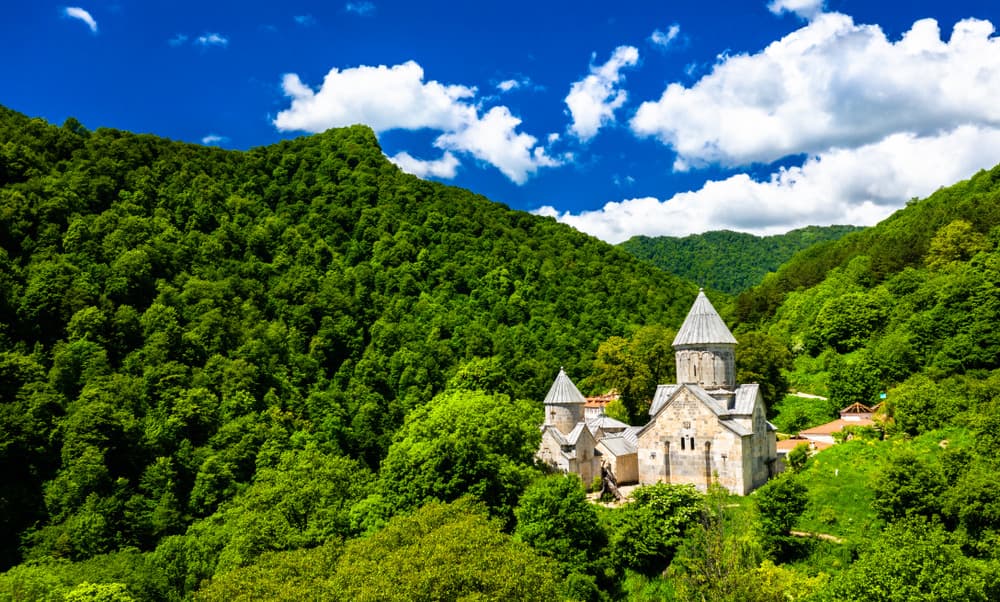
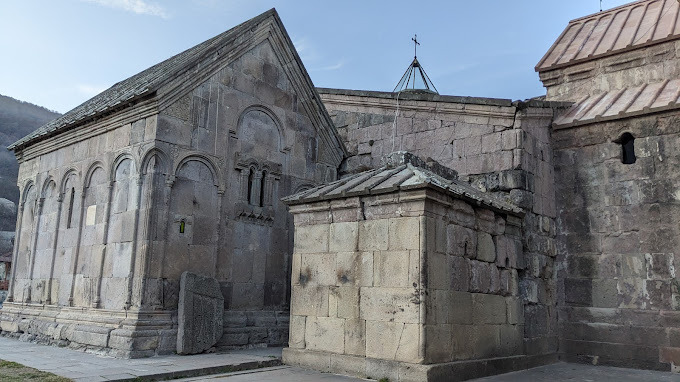
Haghartsin Monastery is located in the Tavush region, in northeastern Arménie, about twenty kilometers from Dilijan. Founded in the 10th century in a wooded valley of the Lesser Caucasus range, it comprises three churches, a refectory, and several khachkars that chronicle nearly a thousand years of Armenian monastic history. Today restored, it remains an active place of worship while being one of the most visited sites within Dilijan National Park.
Why visit Haghartsin
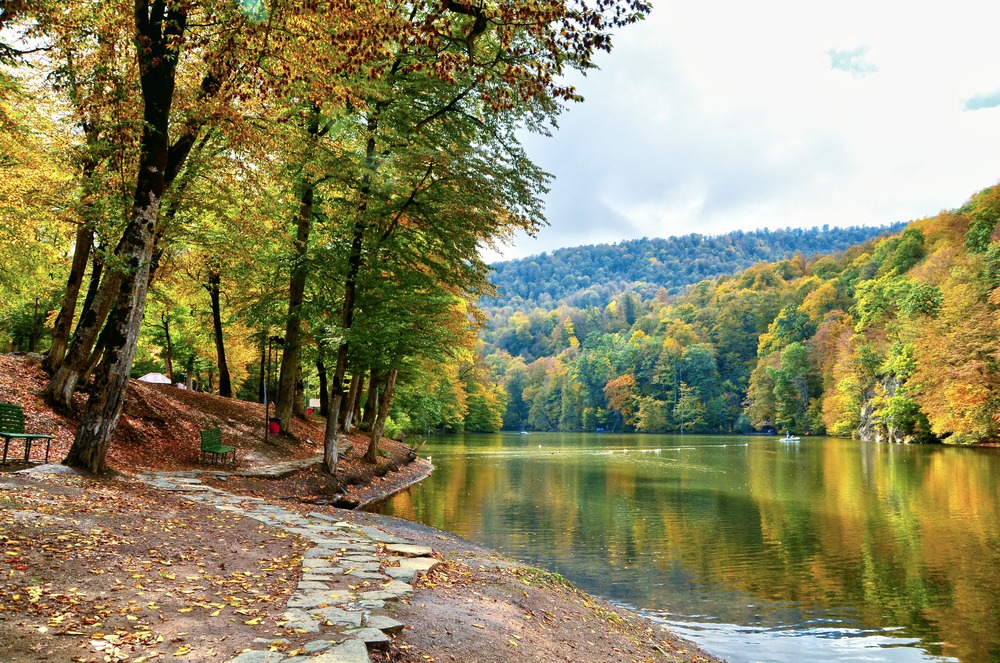
Haghartsin offers several compelling reasons to visit, making it far more than a quick stop. The monastic complex is well preserved, with buildings dating from the 13th century that allow you to trace the evolution of Armenian religious architecture. The forested setting, opening onto the Tavush massifs, contrasts with the more arid sites found in the country's south. Finally, its proximity to Dilijan makes it an easy half-day excursion to add to an itinerary toward Lake Sevan or the nearby Goshavank monastery.
History
Founded in the 10th century, the monastery was damaged during the Seljuk invasions that swept through the region in the 11th and 12th centuries. Its reconstruction at the end of the 12th century is associated with Khachatur Taronetsi, a poet and musician who played a decisive role in the work. Beyond the building projects, he established a music school at Haghartsin that introduced a new system of liturgical notation, leaving a lasting mark on Armenian chant tradition.
The monastery's development was interrupted by Mongol invasions in the 13th century before resuming. Significant work took place in the 17th century. After 1920, during the Soviet period, the site was abandoned like most religious establishments in the country.
With independence, Haghartsin was returned to the Armenian Apostolic Church. In 2006, a visit by the Emir of Sharjah, Sultan bin Mohammed al-Qasimi, led to funding for restoration work. Construction began in 2008 under the supervision of the Etchmiadzin Catholicosate and restored the site's overall coherence.
What to see on the site
The Church of Saint Gregory and its gavit
The monastery's main church, dedicated to Saint Gregory the Illuminator, is preceded by a gavit (narthex), a reception hall typical of medieval Armenian architecture that served simultaneously as a vestibule, teaching space, and burial place for benefactors.
Sourp Stepannos (1244)
A small church dedicated to Saint Stephen, built in cross form. It is used today for baptisms, making it one of the still-vibrant spaces within the complex.
Sourp Astvatsatsine (1281)
The most accomplished church of the ensemble. Its doors are decorated with carved stalactites and trilobed motifs. The façade bears a rare representation of the donors, an iconographic detail uncommon in Armenian religious art and well worth observing closely.
The Refectory (1248)
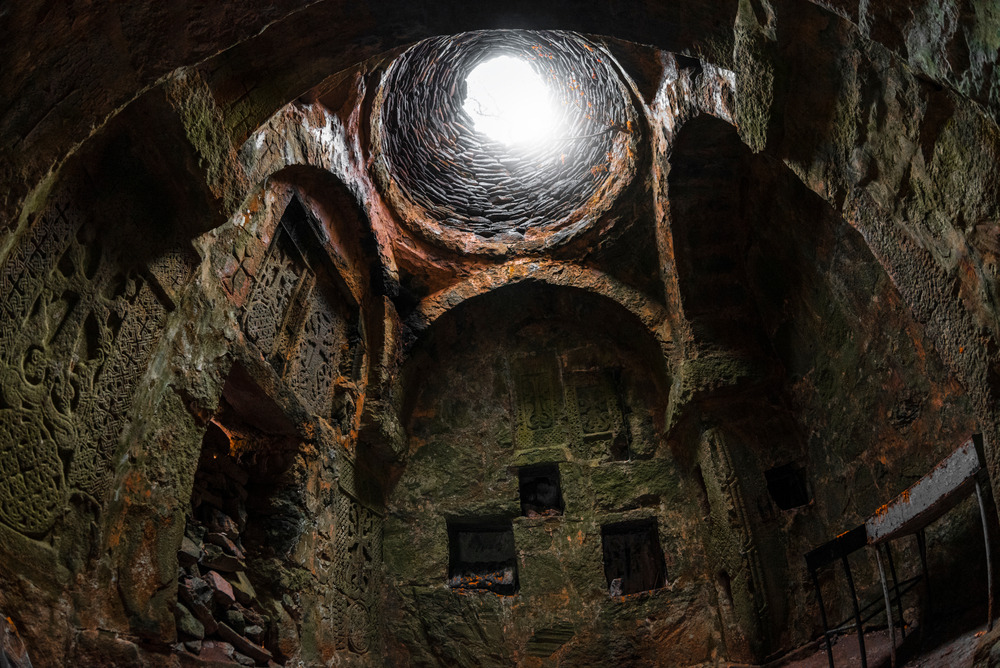
Built in the mid-13th century, the refectory is a vast vaulted hall. Today it serves as a gathering space for celebrations within the monastic community.
The Khachkars
Several carved stone crosses (khachkars) dot the site. The one near Sourp Astvatsatsine, attributed to the master craftsman Poghos, is among the most remarkable. These stelae, inscribed on UNESCO's intangible heritage list, are a signature of Armenian religious art.
Practical Information
- Access: The monastery is open to the public. Entrance is generally free.
- Dress code: Covered shoulders and long pants or skirts are recommended, as in all active monasteries.
- Duration of visit: Allow 45 minutes to 1.5 hours depending on your interest in architecture.
- On-site: A few stalls offer local products (gata, honey, herbs) at the site entrance.
When to visit
The favorable season runs from April to November, with optimal conditions from May to October when the surrounding forest is green and temperatures are mild at altitude. Autumn, in October, offers particularly striking colors in the beech forests of Tavush. In winter, access remains possible but snow may make the road more challenging; plan for an appropriate vehicle.
How to get there
- By car: From Yerevan, allow 1.5 to 2 hours via the M4 motorway; from Dilijan, 20 to 30 minutes along a forest road.
- By taxi: A practical option from Dilijan at a modest rate, to be negotiated beforehand. From Yerevan, a round trip remains a significant expense.
- By public transport: A marshrutka connects Yerevan to Dilijan; from Dilijan, take a taxi to reach the monastery, as there is no regular service.
- On foot: A 12.2 km waymarked trail following the Trans Caucasian Trail (TCT) connects Dilijan to Haghartsin through the forest. Allow a half day of walking.
- Organized excursion: Most tours combine Haghartsin with Lake Sevan, Dilijan, and sometimes Goshavank.
Nearby
Visiting Haghartsin fits well into a short circuit around Dilijan. Goshavank monastery, another medieval foundation renowned for its khachkars, lies about thirty kilometers away. Further south, the Temple of Garni, the country's only preserved Greco-Roman structure, complements a tour of Armenian architecture well. In Yerevan, the Armenian Genocide Memorial and the Monument to the Armenian Alphabet are essential stops for understanding the nation's cultural identity.
Frequently Asked Questions
Frequently asked questions
Allow 45 minutes to 1.5 hours on-site depending on your interest in architecture and photography. Adding the journey from Dilijan, the excursion takes up a half day.
Access to the site is generally free. Since the monastery is active, appropriate dress is expected.
Yes. A 12.2 km waymarked trail following the Trans Caucasian Trail connects Dilijan to the monastery through the forest. The walk requires good hiking shoes and takes about half a day.
Yes. The monastery visits easily alongside Goshavank, Dilijan, and Lake Sevan, either on a full day from Yerevan or across two more leisurely stages.
Yes, but the road from Dilijan may be snow-covered. An appropriate vehicle or a transfer with a local driver is recommended.
Plan your trip
Haghartsin naturally fits into an itinerary across northern Arménie, between Dilijan, Lake Sevan, and the Tavush region. To prepare your stay and build a customized route, consult our trips to Arménie.
Nearby
Interested in this visit?
We can include it in your personalised itinerary.