Saint
Saint
Cathedral founded in the 4th century, seat of the Catholicos and one of the world's oldest Christian monuments, UNESCO-listed in Vagharshapat.
The Mother Church of Saint Etchmiadzine, in Vagharshapat, is the spiritual centre of the Armenian Apostolic Church and the seat of the Catholicos of all Armenia. Often described as one of the world's oldest cathedrals in Christian history, it was founded in the 4th century, shortly after Armenia adopted Christianity as its state religion in 301—a world first. Inscribed on the UNESCO World Heritage list, it remains an active place of worship and a landmark for understanding Armenian identity.
Why visit Etchmiadzine
The site brings together four dimensions rarely found in a single place: a cathedral among Christianity's oldest, an ecclesiastical seat still in active use, a museum housing exceptional liturgical relics, and a UNESCO-inscribed complex surrounded by monuments from the 4th to 7th centuries. For anyone interested in early Christian history, Caucasian architecture, or Armenian spirituality, it's an essential anchor point. The visit is accessible (free entry) and easily combined with other nearby UNESCO sites.
History
Founded in the 4th century, the cathedral accompanied the evangelization of the Armenian kingdom following its adoption of Christianity as the state religion in 301. Tradition holds that Gregory the Illuminator chose its location following a vision—Etchmiadzine literally means "the Only-Begotten Son descended." The building underwent several reconstructions following earthquakes and liturgical changes, but the essential structure visible today dates from the 5th century.
In the 21st century, major restoration work was carried out in 2001 to mark the 1,700th anniversary of Armenia's Christianization. Roofing, walls, and decorative elements were renewed, reinforcing the site's role as a national and religious symbol.
What to see on site
The architecture
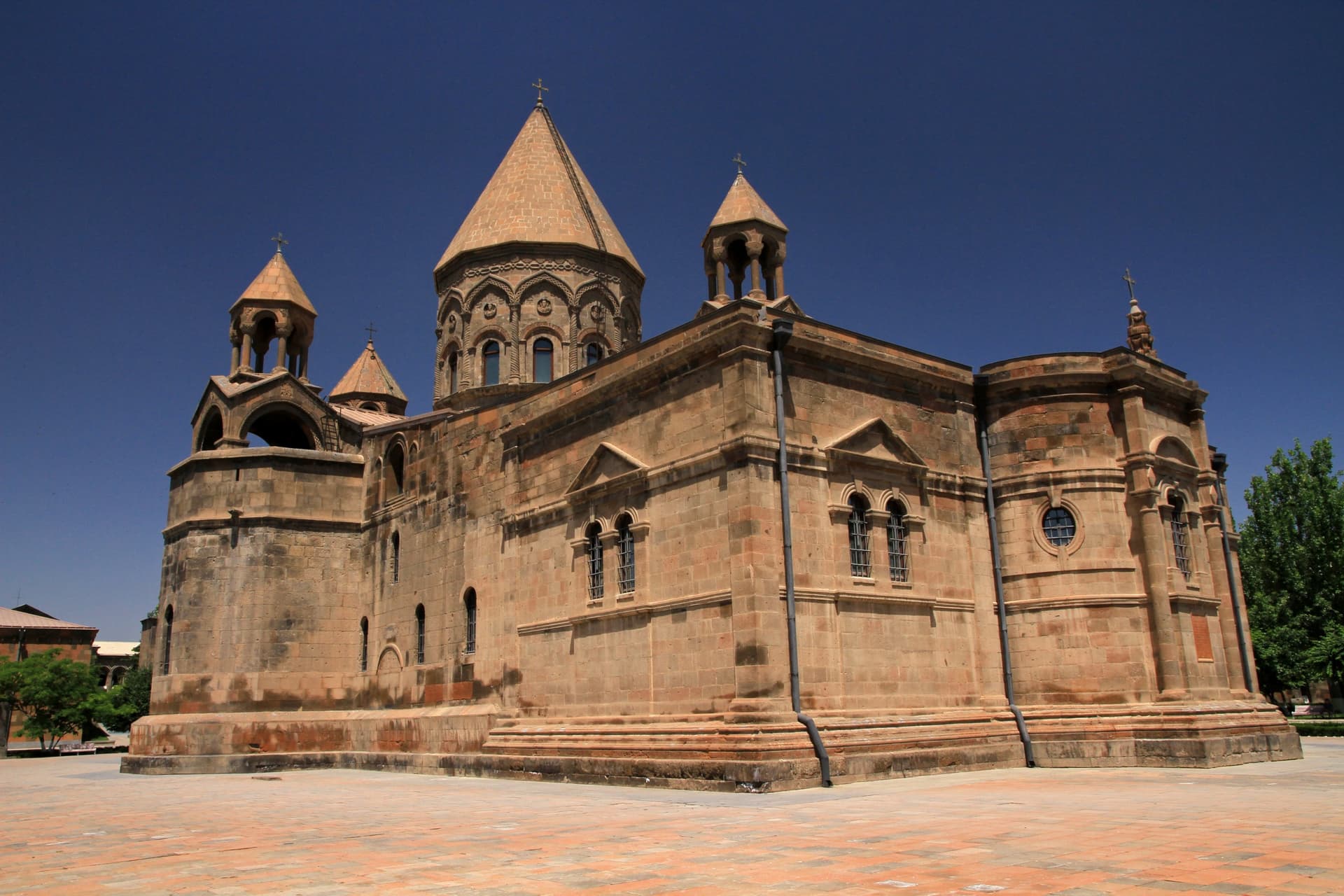
The cathedral is an emblematic example of Armenian religious architecture, preserved in its 5th-century layout. It is distinguished by:
- A cruciform plan with a central dome, a model that would inspire many churches throughout the region.
- Four projecting apses, semicircular on the interior and polygonal on the exterior.
- A conical roof, typically Armenian, crowning the dome.
- Grey stone walls enhanced with bright red additions dating from the 17th century.
The interior
The interior decoration blends Persian art influence with Armenian Christian tradition. Frescoes with floral and figurative motifs are visible, along with saints' portraits and paintings restored several times over the centuries. The marble floor, remade during recent restoration campaigns, gives the space great clarity.
The treasury and complex
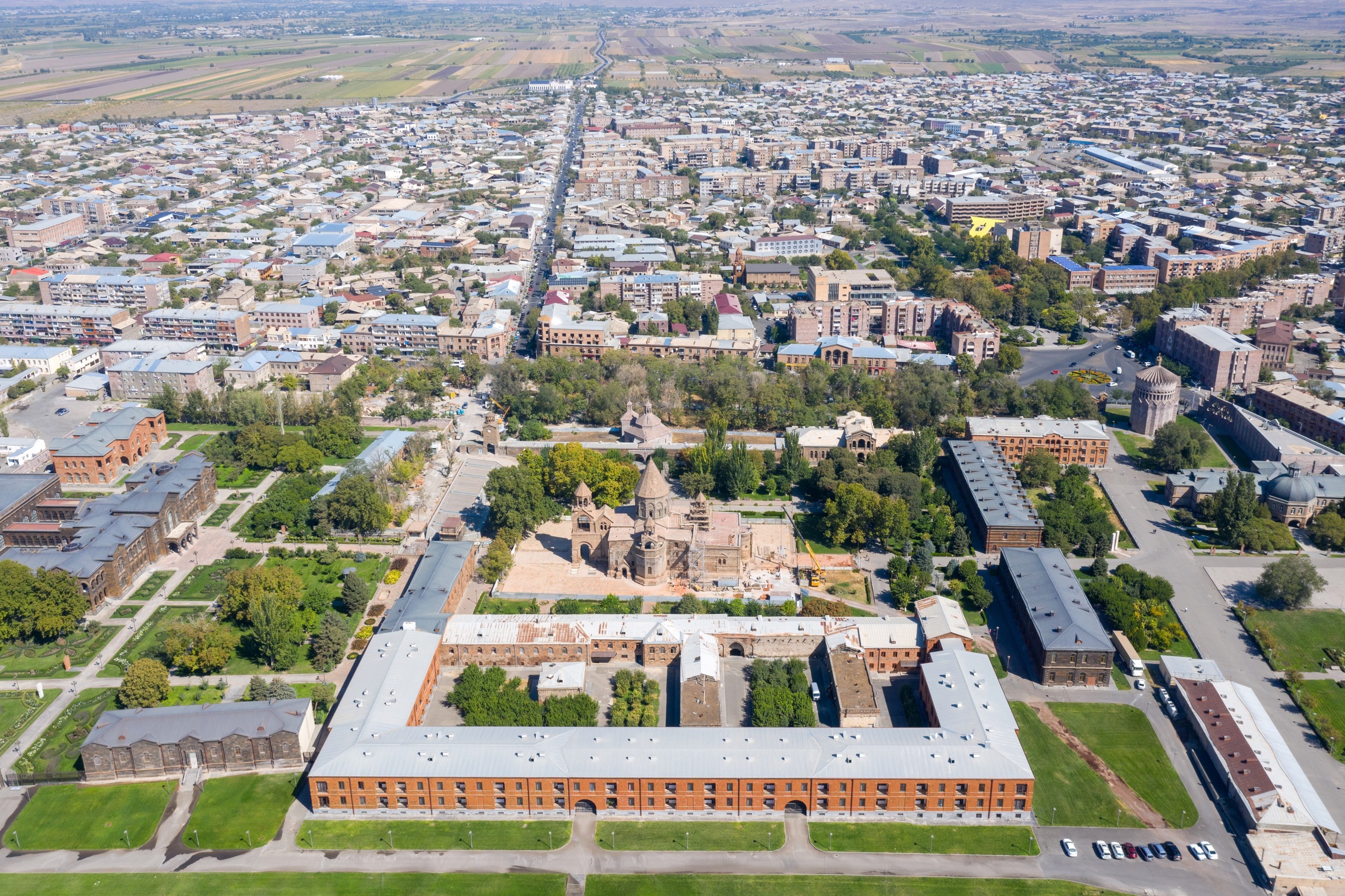
The adjoining museum preserves religious manuscripts, ancient crosses, reliquaries, and icons. The complex also houses the residence of the Catholicos, a theological seminary, and several secondary buildings. Etchmiadzine thus functions as a genuine ecclesiastical campus rather than a static monument.
Practical information
- Entry: free access to the cathedral; donations are appreciated. The treasury museum may require a separate ticket at a modest rate.
- Duration of visit: allow 1 to 2 hours for the cathedral, treasury, and tour of the complex.
- Dress code: modest clothing required (shoulders and knees covered). A headscarf is appreciated for women during services.
- Photography: permitted outside; ask permission indoors and refrain during liturgies.
- Hours: open daily; hours vary depending on services and religious holidays—best to check before departure.
When to visit
Etchmiadzine can be visited year-round. May to June and September to October offer the most pleasant conditions, with mild temperatures and lighting favourable for photography. Winter is harsher but possible.
To experience the site in its liturgical dimension, two key dates stand out:
- Armenian Christmas (January 6): celebration of the Nativity and Epiphany combined, following the Armenian Apostolic Church calendar.
- Easter: major liturgies, processions, and traditional chanting.
During these celebrations, the crowds are large but the spiritual experience particularly intense.
How to get there
- By air: Zvartnots international airport (EVN) is the closest. It is approximately twenty minutes' drive from Etchmiadzine.
- By car: from Yerevan, follow the M5 motorway for around twenty kilometers. Allow approximately 30 minutes depending on traffic.
- By marshrutka: minibuses depart regularly from Yerevan's central bus station. The journey takes 30 to 40 minutes at a very modest cost.
- By taxi or ride-sharing: a convenient option for combining Etchmiadzine with other nearby sites in a single day.
Nearby attractions
Vagharshapat and its surroundings concentrate several UNESCO-inscribed sites, making the region particularly rich for lovers of early Christian architecture:
- Saint Hripsime Church (7th century), a few minutes' drive away, one of Armenia's masterpieces of architecture.
- Saint Gayané Church, neighbouring the cathedral, contemporary with Saint Hripsime.
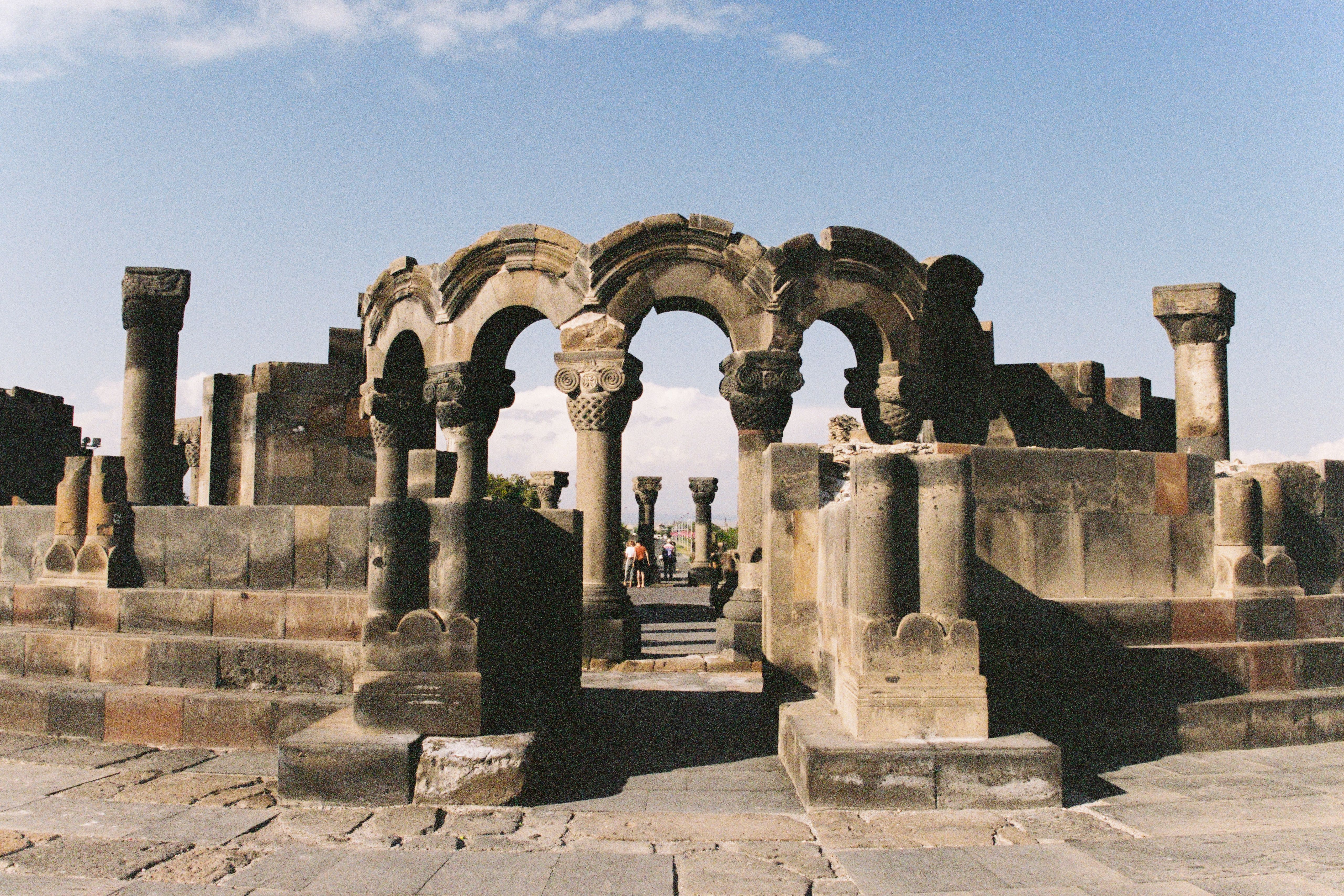
- Zvartnots ruins, a 7th-century collapsed circular cathedral, halfway to Yerevan.
- In Yerevan itself, the Matenadaran, the national repository of ancient manuscripts, ideally complements a spiritual visit to Etchmiadzine.
- To extend your exploration to monasteries, Goshavank and the Saint Gregory the Illuminator Cathedral offer interesting counterpoints.
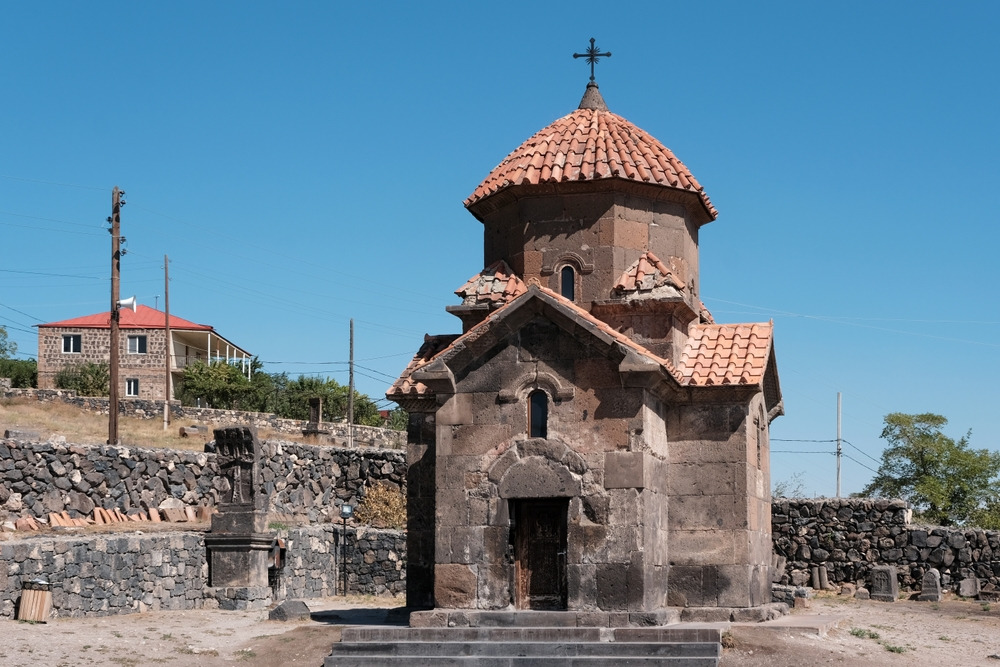
- In Ashtarak, the small Karmravor Church (7th century) illustrates the rural architecture of the era.
Frequently asked questions
Frequently asked questions
Learn more
Etchmiadzine is often one of the first stops on an Armenia itinerary, to be combined with Yerevan, Lake Sevan, and the monasteries of the south. To plan a complete route, consult our Armenia travel guide.
Nearby
Interested in this visit?
We can include it in your personalised itinerary.