Lake Arpi
Lake Arpi
High-altitude lake at 2,023 m in Shirak province, Lake Arpi is a Ramsar site within the namesake national park, renowned for its Dalmatian pelicans and Armenian gulls.
Lake Arpi is a high-altitude body of water located in Shirak province, in the far northwest of Arménie, near the Turkish border. Heart of the namesake national park established in 2009, it is one of the South Caucasus's major ornithological sites and has been listed on the Ramsar List of Wetlands of International Importance since 1993.
Why visit Lake Arpi
Lake Arpi appeals primarily to travellers drawn to pristine natural environments and wildlife observation. More than 100 bird species have been recorded here, and the site is one of the few known breeding grounds for the Dalmatian pelican (Pelecanus crispus) and the Armenian gull (Larus armenicus), an endemic Caucasian species. Its contrast with Arménie's classic cultural sites—monasteries, temples, memorials—makes it a complementary stop for those with several days in the country.
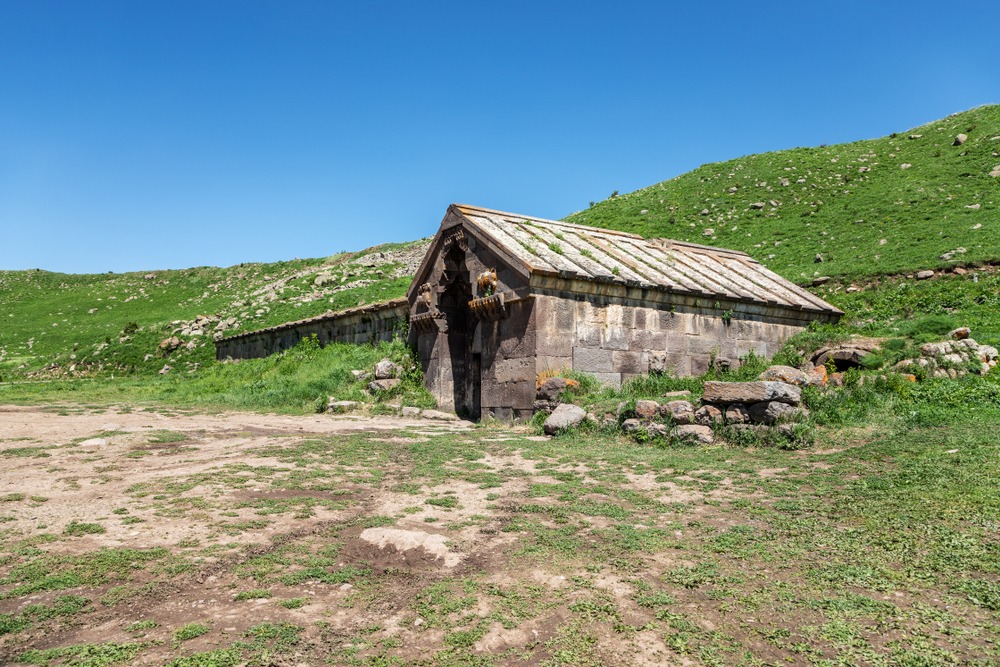
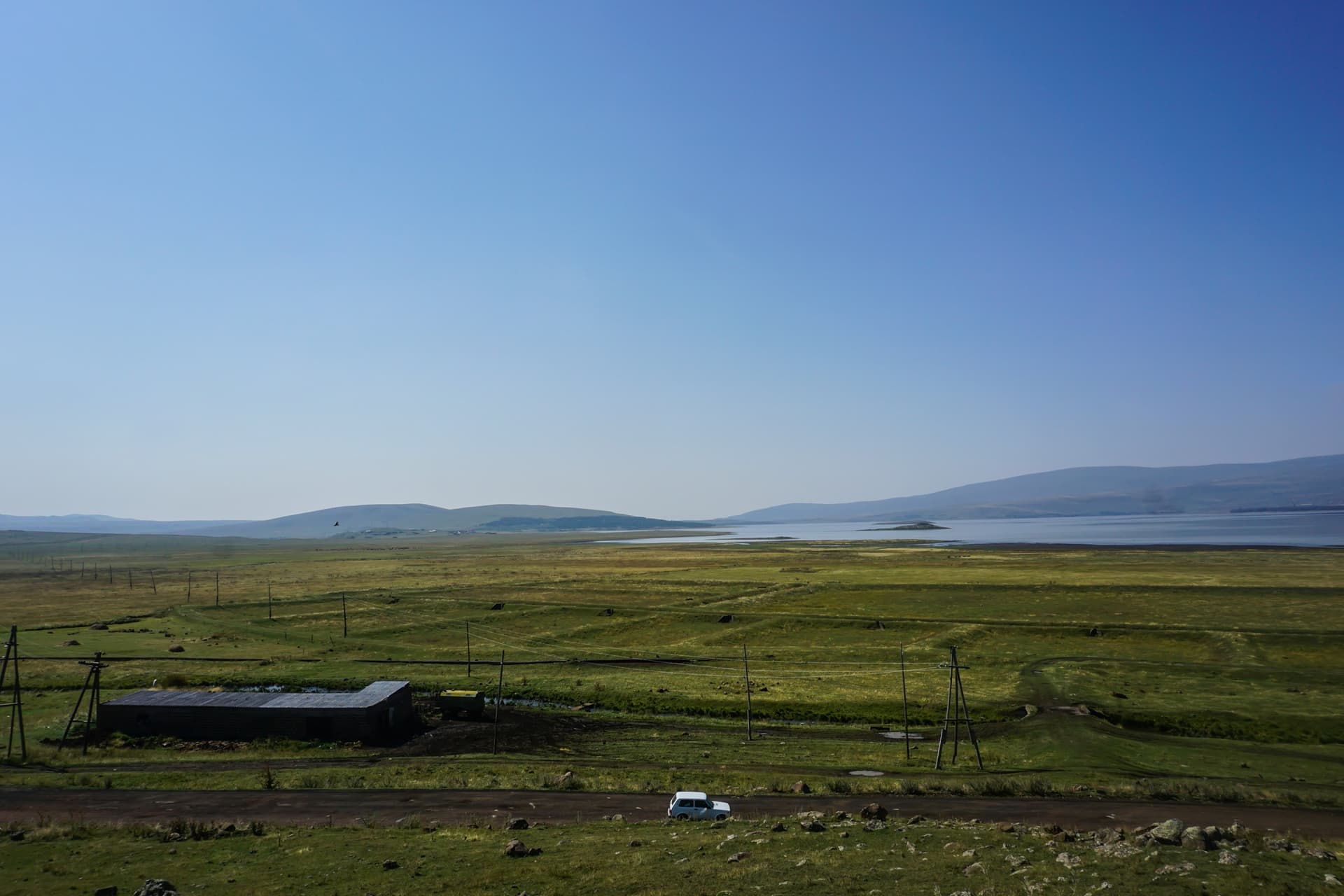
The altitude (2,023 metres), the particular light of the Ashotsk plateau, and the relative isolation of the region compose an open landscape, without dramatic relief but of great visual breadth.
Geography and characteristics of the lake
Lake Arpi extends over approximately 22 km² at 2,023 metres elevation, within the Ashotsk depression in the Lesser Caucasus. Its maximum depth remains modest, around 8 metres, for an estimated volume of 50 million m³. It is fed by snowmelt and by the Arpa River, which gave it its name. The lake is the primary source of the Akhurian River, a tributary of the Aras that subsequently marks the Arménie-Turkey border.
The toponym "Arpi" is traditionally associated in Armenian with the idea of sun or sunrise, although the precise origin of the name remains debated and likely connected to the Arpa River basin. The lake is moreover integrated, via regional hydraulic systems, into the water management system of northwestern Arménie.
History and protection status
The Ashotsk plateau region has been inhabited since prehistoric times. Excavations and surveys conducted in Shirak province have uncovered remains attributed to several civilisations that succeeded one another in the South Caucasus: Hurrian, Urartian, Persian, Roman, Arab, Mongol, Turkish, and Russian presences, in the form of pottery, tools, and inscriptions. Northwestern Arménie has also been marked by decisive episodes of the early twentieth century, notably the Battle of Sardarapat (1918) and the resistance of Armenian fedayeen in 1920, which belong to the collective memory of the entire region.
From an environmental standpoint, Lake Arpi has been inscribed since 1993 on the Ramsar List of Wetlands of International Importance. Lake Arpi National Park was established in 2009 to protect the lacustrine ecosystem and its waterfowl populations. Commercial fishing is prohibited and human activities are regulated by park administration.
What to see and do
Bird watching
Ornithology is the primary activity. Besides the Dalmatian pelican and Armenian gull, you may observe the common snipe, montagu's harrier, little grebe (Tachybaptus ruficollis), and shelduck. Binoculars and an identification guide are essential; the best observation times are early morning and late afternoon.
Flora and hiking
The wetland meadows bordering the lake harbour flora characteristic of high-altitude wetlands: Siberian iris, Gladiolus imbricatus, Polygonum amphibium, Traunsteinera sphaerica. Trails lead to the neighbouring villages of Shaghik and Garnarich, where you will find classic Armenian culinary specialities (lavash, khorovats, dolma).
Winter activities
The lake is frozen and snow-covered from November through late April. The area is suitable for snowshoeing and ski touring, with very light crowds.
When to go
The most favourable period runs from late May to early September, when access roads are clear and nesting is in full swing. May and June offer the best conditions for observing breeding birds and the flowering of wetland meadows. In July-August, temperatures remain cool due to altitude. Between November and April, access is more unpredictable due to snow and frost.
Practical information
Access to the lake itself is free, but entry to the national park is subject to a modest fee collected by site administration. No heavy tourist infrastructure is installed on-site: bring water, warm clothing (temperatures drop quickly in the evening, even in summer), and food. Camping is permitted in certain park zones, provided you follow staff instructions and leave no trace.
Telephone coverage is partial. The nearest accommodation can be found in Ashotsk and Gyumri.
How to get there
From Yerevan, plan approximately 3 hours 30 minutes of driving to cover the 200 kilometres separating the capital from the park. The most direct route takes the M1 motorway northwest toward Gyumri (~120 km), then the H-17 road to Ashotsk. Secondary tracks then lead to the national park entrance, across the Ashotsk plateau.
A personal vehicle or private transfer is necessary: there is no regular public transport serving the park. A stop in Gyumri, the country's second city, can be logically integrated into the itinerary.
Nearby and elsewhere in Arménie
Lake Arpi combines well with other sites in the country as part of a multi-day itinerary. In Yerevan and its surroundings, the Garni temple and the Armenian Genocide Memorial are among the most visited cultural stops. The Armenian alphabet monument, situated on the route between Yerevan and the north, extends the journey from a heritage perspective. For lovers of monastic architecture, the Goshavank complex, in Tavush province, offers an interesting counterpoint to the open landscapes of Lake Arpi.
Frequently asked questions
Frequently asked questions
The park is officially open year-round, but road access is constrained from November to April due to snow. The most practical period runs from late May to early September.
May and June coincide with the nesting period of the Dalmatian pelican and Armenian gull, making these the most interesting months for ornithology.
A modest entrance fee is charged at the national park entrance. As tariffs change regularly, enquire on-site or through your travel agency.
No, there is no regular direct service. A private vehicle or organised transfer is necessary, with a possible stop in Gyumri.
Camping is permitted in certain park zones, provided you comply with regulations and environmental standards. Check with staff at the entrance.
Plan your trip to Arménie
Lake Arpi integrates beautifully into an itinerary combining cultural sites, monasteries, and natural landscapes. To build a coherent route and benefit from local expertise, consult our tailor-made trips to Arménie.
Interested in this visit?
We can include it in your personalised itinerary.