Karmravor Church
Karmravor Church
Built in the 7th century in Ashtarak, Karmravor Church preserves its original red-tiled dome and a medieval cemetery adorned with khachkars.
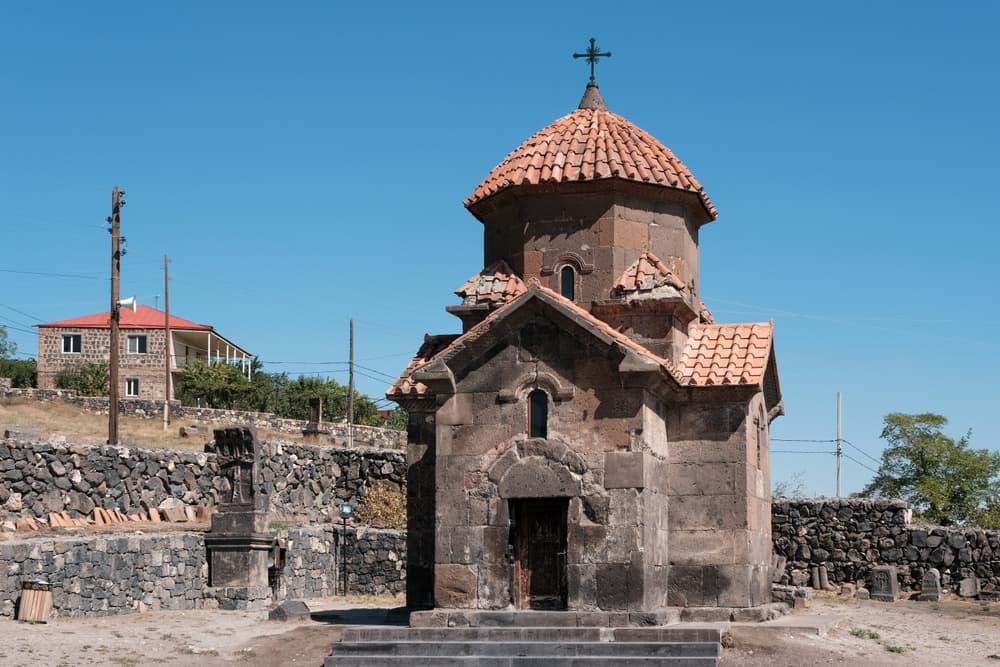
Karmravor Church stands in Ashtarak, roughly twenty kilometers northwest of Yerevan. This small-scale edifice, constructed in the 7th century, ranks among the rare Armenian churches to have preserved its original roof. Its dome covered in red tiles earned it its name: Karmravor means "reddish" in Armenian.
Why visit Karmravor
Karmravor appeals to visitors drawn to early Christian Armenian architecture and the religious history of the Caucasus. The building is compact and austere, without excessive ornamentation, yet its original roofing makes it a precious architectural witness. The site gathers within the same perimeter the church, a medieval cemetery with its khachkars (carved stone crosses), and the burial place of a major 20th-century Armenian poet, Gevorg Emin. The visit is brief, yet rich in heritage elements.
History of Karmravor Church
Karmravor was built in the 7th century by priests Manas and Gregory, with support from the village inhabitants. Dating from the 6th-7th century overall, it stands as one of the rare churches in Arménie to have preserved its original roof—a remarkable achievement for a structure of such antiquity.
The building initially served as a princely vault before becoming a convent of nuns until 1813. Surrounding it, the medieval cemetery shelters khachkars and tombs from the 13th-17th centuries. The oldest khachkar, named Arqakazmoghin, dates to 1184.
A local legend is associated with Karmravor and two neighboring churches. It recounts that three sisters, all in love with the same man, threw themselves into the Ashtarak gorge, dressed respectively in red, apricot, and white. In their memory, three churches in corresponding colors are said to have been built: Karmravor (red), Tsiranavor (apricot), and Spitakavor (white).
What to see on site
Exterior architecture
The church adopts an inscribed cruciform plan, typical of ancient Armenian architecture. The dome with red tiles, preserved from its origins, constitutes the most singular element. The dressed stone walls display the austerity characteristic of 7th-century edifices.
Interior
The interior is of modest proportions. The church preserves the manuscript gospel Shukhonts, gifted in 1873, a testament to the site's vitality in the 19th century. The sobriety of the volumes enhances the quality of the stone and the light that filters through the narrow openings.
Cemetery and khachkars
The courtyard hosts several khachkars dating from the 13th to 17th centuries, including Arqakazmoghin (1184), the oldest on the site. These sculpted crosses illustrate the stylistic evolution of this distinctly Armenian art form over several centuries.
The tomb of Gevorg Emin
The Armenian poet Gevorg Emin (1919-1998), a major figure in Soviet Armenian literature, rests within the site's grounds. His tomb has become a place of contemplation for lovers of Armenian poetry.
Practical information
- Address: Khachatur Abovyan Street, Ashtarak.
- Admission: free entry.
- Duration of visit: allow 30 to 45 minutes, longer if you explore the cemetery in detail.
- Dress code: modest clothing covering shoulders and legs is recommended when entering the church, in accordance with local religious customs.
- Guide: an English-speaking guide enables deeper exploration of the historical and religious context, as little information is displayed on site.
When to visit
Ashtarak's climate mirrors that of the Armenian plateau: hot, dry summers and short winters with generally light snowfall. May-June and September-October offer the most pleasant conditions, with moderate temperatures and light favorable for photography. Summer is workable but can be warm midday. Winter, quieter in terms of crowds, suits those seeking a less frequented site.
How to get there
From Yerevan by car
Ashtarak lies approximately 20-25 kilometers northwest of Yerevan, accessible via the M1 highway in about thirty minutes. Once in town, follow Khachatur Abovyan Street. Parking is available near the church.
By public transport
Marshrutkas (minibuses) regularly connect Yerevan to Ashtarak from Kilikia station. The journey takes roughly 30 to 40 minutes. From central Ashtarak, the church is accessible on foot (approximately 1.5 km) or by local taxi.
By taxi or with a driver
A taxi from Yerevan remains a practical option to combine Karmravor with other sites in the Aragatsotn region. It is advisable to agree on the fare before departure or use a local app.
What to see nearby
Ashtarak and the Aragatsotn region host several sites that complement Karmravor:
- Tsiranavor and Spitakavor: the two churches linked to the legend of the three sisters, located in Ashtarak and its immediate surroundings.
- Garni Temple, the sole Greco-Roman temple preserved in Arménie, accessible as a day excursion from Yerevan.
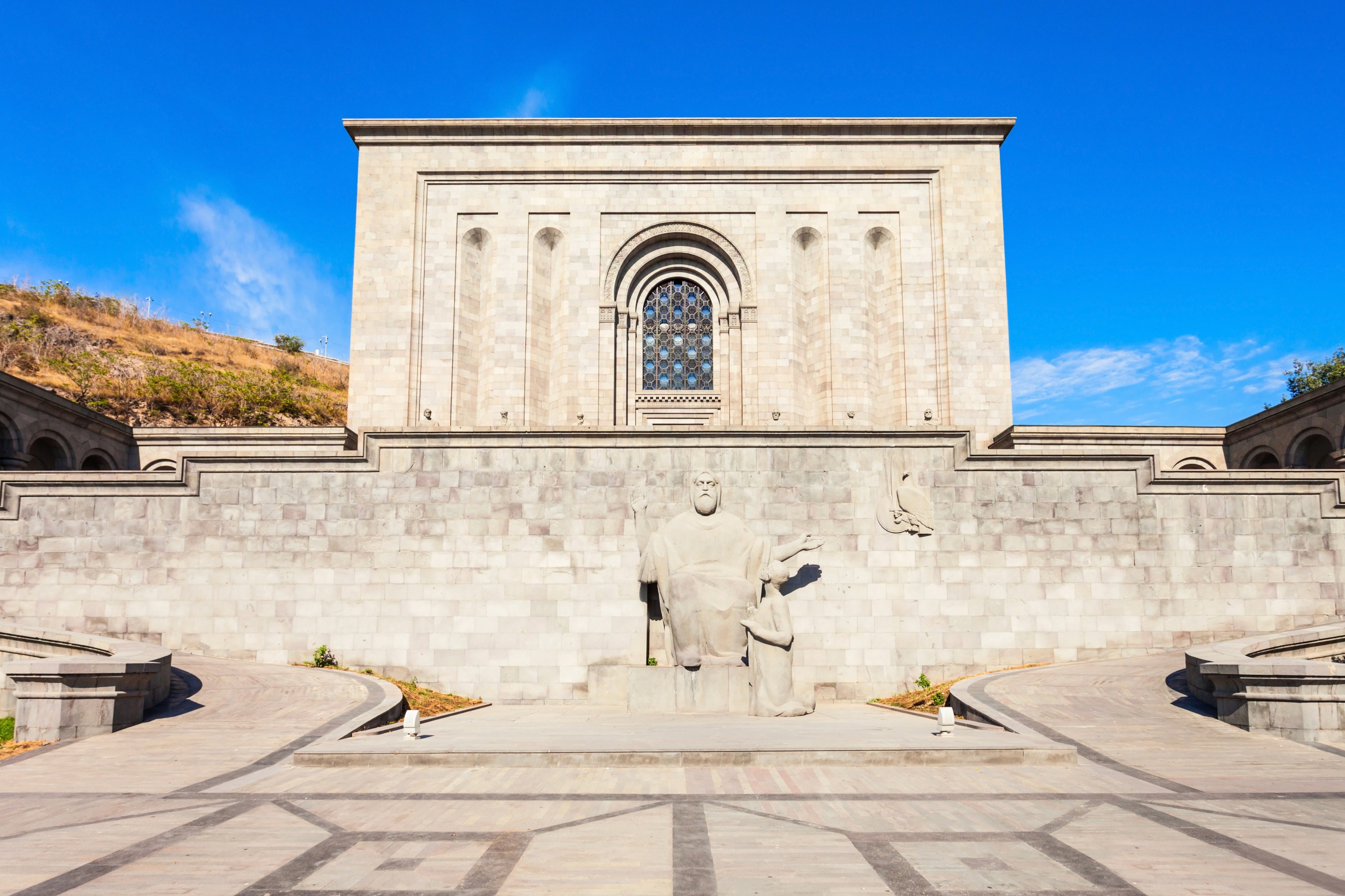
- The Armenian Alphabet Monument, situated in the same Aragatsotn region, on the slopes of Mount Aragats.
- Saint Gregory Cathedral in Yerevan, to extend your discovery of Armenian religious heritage.
Frequently asked questions
Frequently asked questions
Karmravor means "reddish" in Armenian, referring to the color of the tiles that cover the church dome, preserved since its 7th-century construction.
The site remains a heritage and religious place. It functioned as a convent of nuns until 1813. Today, it welcomes visitors and pilgrims.
Allow 30 to 45 minutes to visit the church, the medieval cemetery, and the surrounding khachkars. The visit can be combined with other Ashtarak sites such as Tsiranavor and Spitakavor.
Yes. Located 20-25 km from Yerevan, Ashtarak is reached in 30 minutes via the M1 highway, allowing for a half-day excursion or a stop en route to Mount Aragats.
According to local tradition, three sisters in love with the same man threw themselves into the Ashtarak gorge dressed in red, apricot, and white. Three churches in corresponding colors are said to be dedicated to them: Karmravor, Tsiranavor, and Spitakavor.
Plan your trip to Arménie
Karmravor fits naturally into an itinerary combining Yerevan, the Aragatsotn region, and Armenia's great monastic sites. To build a bespoke journey including Ashtarak and the country's religious heritage, explore our tours in Arménie.
Nearby
Interested in this visit?
We can include it in your personalised itinerary.